How to clean brass light fixtures comes down to two steps before you touch anything: turn the power off at the breaker, and find out which finish you have. Raw brass, lacquered brass, plated brass and a deliberately darkened patina each want different treatment, and the cleaner that brightens one will ruin another.
The second step matters more than most guides admit. Of the 300 copper and brass lights we read across six workshops in September 2026, 199 are sold with an aged, oxidized, patina, antique or rustic finish named in the title. On those lights the dark color is the product. Polish one and you have removed what you paid for.
The workshops are not much help here. Not one of those 300 listings explains how to clean the light. This guide covers what they leave out: safety first, how to identify the finish, how to clean each kind in place, outdoor and coastal care, the glass, and whether a wax or sealer is worth it.
Do you need to turn the power off to clean a light fixture?
Yes, at the breaker and not only at the wall switch, and then let the bulbs cool before you touch them. A switch can be wired on the wrong leg or flipped by somebody else while your hand is inside the shade, and a bulb that has been on is hot enough to burn.
Cleaning guides and lighting makers agree on the order. One cleaning company puts it plainly: turn the circuit breaker off at the electric panel to avoid electrocution risk. A lighting maker gives the same first step for glass pendants, making sure the electricity supply to the light is turned off and the lightbulb is cool. Bevolo, which makes copper lanterns, puts a number on the wait: turn the lantern off and let the fixture cool for about 15 minutes.
A brass lighting maker adds the rule that matters most for metal fixtures: never spray anything directly at a fixture with a socket or an LED driver. Liquid runs down the inside of a shade and into the socket, and it stays there long after the outside looks dry. Every method in this guide puts the liquid on the cloth first.
The bigger danger is usually the ladder, not the wiring. Most ceiling lights are above arm’s reach, and a step stool on a hard floor is where cleaning becomes an injury. A Consumer Product Safety Commission report on older adults found that people 65 and over accounted for about 16% of the emergency room-treated injuries associated with ladders, but they were 39% of the hospitalizations for ladder injuries. The CDC’s study of ladder falls at work found that falls of 6 to 10 feet were the most common among emergency department cases, which is about the height you stand at to reach a pendant.
OSHA’s ladder rules are written for workers, but they translate to a kitchen. Always maintain a 3-point (two hands and a foot, or two feet and a hand) contact on the ladder, keep your body near the middle of the step, face the ladder, and do not use the top step/rung of a ladder as a step/rung unless it was designed for that. The cleaning company above makes the household version of the same point: choose a more stable step ladder over an extendable ladder whenever possible.
In practice, that means one hand for the ladder and one for the cloth. If a fixture needs both hands, take the shade down and clean it at a table.
How do you tell which finish your light has?
Look at the product name first, then test with a soft cloth and a magnet. Those three checks separate the four finishes you will meet on copper and brass lighting, and each one is cleaned differently.
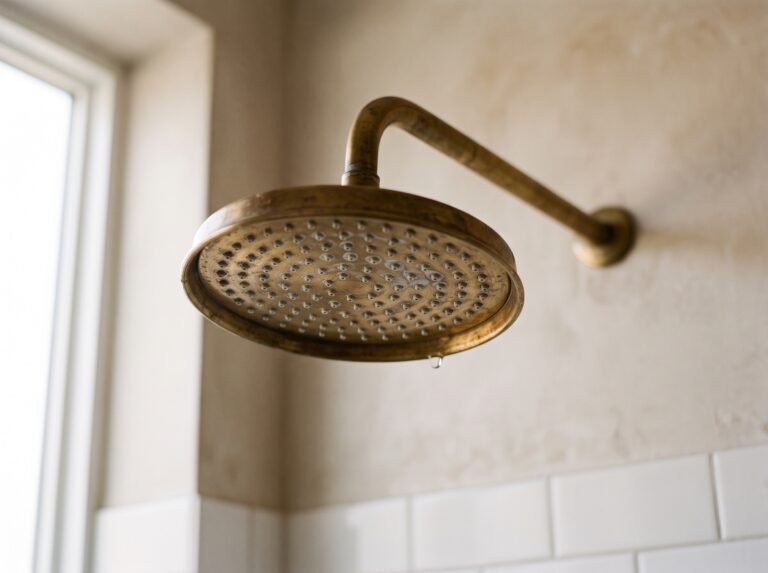
Start with the name, because the maker usually told you. If the listing said oxidized, patina, aged, verdigris, antique or rustic, the finish was darkened on purpose, often in the workshop. Moroccan Interior, one of the workshops we follow, describes how artisans sometimes wipe or mist copper with weak mineral solutions that encourage oxygen bonding, and that applying gentle heat speeds the chemical reaction between copper and oxygen. That color is not dirt and it is not damage.
If the name says unlacquered or raw, there is no coating at all. Plank, a hardware maker, draws the line clearly: lacquered brass has a clear protective coating over the metal and holds a consistent color, while unlacquered brass has no coating. Rub an out of sight spot with a clean white cloth. Raw brass leaves a gray or dark mark on the cloth. Lacquered brass leaves nothing, because the cloth never reaches the metal.
Then the magnet, which tells solid from plated. Brass is a nonferrous metal, meaning it does not contain iron and should not attract a magnet, so solid brass ignores it. If the magnet sticks firmly, the object is likely made of steel or iron with a thin brass coating. A plated light can be cleaned, but it cannot be polished hard, because the brass is only a skin.
| Finish | How to tell | Clean it with | Never use |
|---|---|---|---|
| Deliberate patina (oxidized, aged, verdigris) | The name says so, the color is dark or green on purpose | A dry cloth, or a damp cloth with dish soap, then dry | Polish, acids, abrasive pads |
| Raw or unlacquered brass and copper | A white cloth picks up a gray mark | Dish soap and water, dried at once; polish only if you want it bright | Ammonia, bleach, glass cleaner |
| Lacquered brass | Nothing comes off on the cloth, the shine stays even | Dish soap and water, dried at once | Any metal polish, it strips the lacquer |
| Brass plated | A magnet sticks | Dish soap and water, gently | Abrasive polish or scouring, it wears through |
Old fixtures are where people get caught. Many vintage brass lights were lacquered at the factory, and a lacquer that has started to peel looks like patchy tarnish. Polish it and you get a light that is bright in some places and dull in others. If the dark patches have a clear edge, suspect failing lacquer rather than tarnish.

How do you clean brass light fixtures without taking them down?
Dust it with a dry, soft cloth, then wipe it with a cloth that is barely damp with warm water and a drop of dish soap, and dry it straight away. That is enough for most indoor brass and copper lights, and it is safe on every finish in the table above.
The brass lighting maker quoted earlier gives the full routine: use a cloth dampened with warm water and a small amount of mild dish soap, wipe, then wipe again with a clean damp cloth and dry immediately. The second wipe takes the soap off, which matters, because soap left on brass dries to a film that catches dust. Drying matters too. A brass care guide explains that water droplets left to air-dry deposit minerals on the surface, and on raw brass those spots darken faster than the metal around them.
Protect what is underneath before you start. A cleaning brand’s chandelier guide says to place a drop cloth or towel under the fixture to catch any mess and to wear cleaning gloves to prevent fingerprints. Fingerprints are more than cosmetic. The Canadian Conservation Institute warns that fingerprints easily stain polished metal, and on a freshly cleaned raw brass arm they show up as dark ovals within weeks.
For a brass chandelier, work arm by arm, one hand holding the arm still so the fixture does not swing on its canopy. Wrap the cloth around each arm rather than wiping across it, which gets the underside you cannot see from the floor. Do the candle cups and the bobeches last, because that is where dust and wax collect and where you want a fresh corner of the cloth.
Be careful with what goes in the water. The same maker lists ammonia, bleach, and anything marketed as an all-purpose or glass cleaner as things to keep off brass, and explains that ammonia attacks brass and leaves a dull, pitted surface that does not recover. That rules out the glass spray most people reach for, which matters because a light is the one brass object in the house that also has glass on it.

Should you polish unlacquered brass on a light?
Only if you want it bright, because polish removes the darkening rather than cleaning the light. Polishing is a style choice, and on a light it is also a fiddly one, because the polish has to stay off the wiring, the socket and the shade.
Moroccan Interior puts it well for copper: polishing is optional and changes appearance rather than improving function. The same is true of raw brass. A darkened brass pendant gives exactly the same light as a bright one. If you like the warm brown that unlacquered brass turns over a year, the dish soap wipe above is all it ever needs, and our guide on whether unlacquered brass tarnishes shows what it looks like at each stage.
If you do want it bright, the brass lighting maker suggests a commercial paste polish, applied with a soft cloth and buffed off, as the most controllable method. A paste stays where you put it. A liquid runs into seams and holes, and on a light the holes lead to the wiring.
The kitchen remedies need a warning, and here the sources disagree. One cleaning brand suggests that for a tarnished brass chandelier, a rag soaked in warm distilled white vinegar can be dipped in table salt to scrub it. Brass specialists are wary of exactly that. One care guide says vinegar, lemon juice and citric acid strip the patina chemically, but unevenly, and leave a blotchy surface. Insideast, a brass workshop that tested five home methods, advises that on unlacquered brass you should limit acid contact to 60 seconds maximum to avoid stripping the natural patina unevenly.
So if you try vinegar or lemon on a light, do it on a part you can take down, keep the contact short, rinse it completely and dry it. Never let an acid paste sit on an arm that carries a wire.
Museums are stricter again, and their reason applies to lights. The National Park Service tells its staff not to use commercial polishes, as many contain corrosive chemicals such as ammonia or harsh abrasives that can permanently damage delicate surfaces. The Canadian Conservation Institute adds the problem specific to anything with holes: residue of liquid polishes can leak through holes and be left beneath an object, and residue left in crevices keeps working after you have finished. That is why green spots sometimes appear in the joints of a brass light a few weeks after a polish. The polish that was never rinsed out is still reacting.
The full method for raw brass, with the order to try things in, is in our guide on how to clean unlacquered brass.

What if the brass is lacquered or plated?
Use dish soap and water and nothing stronger, because both finishes are thin layers you cannot replace at home. Polish goes through lacquer in one pass and through plating in a few.
Plank’s advice for lacquered brass is simple: dust regularly with a soft, dry cloth, and for more thorough cleaning use warm water with a little mild dish soap, rinse well and dry immediately. On metal polish it is blunt. Brasso and similar polishes are designed for bare metal, and on lacquered brass they’ll strip or cloud the protective coating, leaving an uneven surface that is difficult to repair.
Fixture makers give the same list of things to avoid on their finished brass. Newport Brass, which makes coated brass faucets and accessories, says do not use abrasive cleaners, ammoniated products, rubbing alcohol, detergents, astringents, bleach-based cleaners, aggressive chemicals, abrasive cleaning pads, or harsh polishes, and warns that using them may void the warranty. A light is not a faucet, but the coating is the same kind of coating.
Plated brass is the more fragile of the two. The Canadian Conservation Institute notes that damage to a plating layer or to surface detail can be caused by cleaning with an abrasive polish. On a plated light that damage shows as a gray or silver patch where the steel or zinc underneath comes through, and there is no polish that brings brass back. If the magnet stuck, treat the light like lacquered brass and stop at soap and water.
When lacquer has failed in patches, you have two honest choices. Leave it and accept an uneven finish, or have the lacquer stripped and the brass either relacquered or left raw. Rubbing at the edges of the failed patches with polish is the third choice, and it makes the patches bigger.
How do you clean a copper light with an oxidized or patina finish?
Dust it with a dry cloth, and if it is sticky, wipe it with a lightly damp cloth and a little dish soap, then rinse and dry. Do not use copper cleaner or polish, which would strip the color the light was sold with.
This is the largest group by far. Two thirds of the 300 lights in our September read carry an aged or oxidized finish, and 252 of the 300 have copper in the name. Moroccan Interior, which sells many of them, says oxidized copper does not require specialized care and that routine dusting is usually sufficient. When more is needed, mild soap and water are enough if cleaning is necessary, and abrasive compounds should be avoided because they remove the oxide layer.
Bevolo is firmer still. Its instructions for copper lanterns say DO NOT use any cleaning products on the copper, because some discolor it. Instead, use a dry rag to dust them off or use a lightly damp towel with dish soap to clean the body of the fixture, then rinse the soap off with fresh water. Bevolo adds that it does not recommend trying to undo or alter the copper’s natural oxidation process, and that copper and brass cleaning products could lead to undesired results.
It helps to know which colors are normal. The Canadian Conservation Institute separates the two: tarnish (or patina) is black, while more serious corrosion is green or blue-green. Outdoors, green is the end of a long natural process and protects the copper. Indoors, a powdery green spot on a light that was brown last month is worth a closer look. It usually means moisture or cleaner residue has sat in a joint, and the institute notes that organic acids react with copper to form green corrosion products. Dry the spot, wipe it with a soapy cloth, rinse and dry again, and find where the water came from.
A deliberately verdigris finish is the exception, because the green is the finish. On those, the same rule holds as for any patina: dust, and soap only if you must.

How do you clean outdoor copper and brass lights?
Rinse them with fresh water and wipe them with a soft cloth and dish soap a few times a year, more often near the sea and more often under a roof. Leave the patina alone, because outdoors it is what protects the metal.
Bevolo’s salt air advice is the most practical we found. In salt water environments, it is important to rinse or clean the lights on a regular basis, because salt deposits build up, and the hinges should periodically be oiled to slow the effects of the salt. Its rule on location is the one most people would guess wrong: lights under a covered roof should be cleaned more often, because they will not get rinsed by the rain. A porch light collects salt and grime that a light on an open wall loses in every storm.
Copper outdoors keeps changing for years, and that is normal. Bevolo notes that by the sea copper will oxidize at an accelerated rate and may change color several times, even looking reddish or flaky for a while, before it reaches full verdigris. A copper fabricator puts timings on it: in coastal regions or heavy-industrial areas, the natural patina typically forms within five to seven years, while in rural areas it takes 10 to 14 years to attain a dominant stage. An outdoor lighting maker describes raw brass as shifting into a deeper dark brown finish over time, and is clear that patina does not damage the material.
The glass cleaner question comes up again here, and the advice splits. A landscape lighting supplier recommends cleaning copper fixtures with soft cloth and Windex-type cleaner. The brass lighting maker quoted earlier warns against ammonia and glass cleaners on brass. Bevolo takes a middle line for its lanterns: do not spray the glass directly with any product, because overspray could discolor the copper, and spray the towel instead. We would follow Bevolo, which keeps glass cleaner on the glass and off the metal.
Check the rating before you fit one, because cleaning will not save a light in the wrong place. A damp location is an exterior, interior, or partially protected location that is normally or periodically subject to condensation of moisture, and porches are the most common areas considered damp. A wet location is one where water or other liquid can drip, splash, or flow on or against electrical equipment, which includes any open wall in the rain. Of the 13 lights in our read named as outdoor lights, not one states a damp or wet rating, so ask the workshop in writing before you put one on an exposed wall.

How do you clean the glass shades and the bulb?
Take glass shades down if you can, wash them by hand in warm soapy water, and dry them completely before they go back. Glass cleaner, if you use it, goes on the cloth, never sprayed toward the metal.
A lighting maker’s steps for glass pendants are a good model: once the power is off and the bulb cool, remove the bulb and then the shade, then place the glass in the bowl of warm, soapy water and leave it to soak for a few minutes. It is emphatic that you should never place your glass pendant in a dishwasher. A shade that matches its fixture is not easy to replace.
Dry it with a soft, clean towel, and leave the inside to air for a while longer if it has a narrow neck. For lanterns with fixed panes, Bevolo says to allow the glass to dry completely before turning the light back on. If you take the panes out instead, note which came from where, because Bevolo points out that the door and back panels are different sizes.
The bulb only needs dusting with a dry cloth once it is cold. Keep it dry, and keep the socket dry. That is the one part of the light that should never meet a damp cloth.

How often should you clean them, and does the kitchen change that?
Dust them every week or two and give them a full soap and water clean every few months. Lights in a kitchen need the full clean more often, because grease settles on them.
A home design site points out that grease travels a lot further than you might expect, even settling on ceiling light fixtures, and that grease buildup increases the risk of fire and produces unpleasant odors. Its schedule is the one we would use: dust your lights every week or two, and give them a deep cleaning every few months.
Pendants over an island usually catch more than ceiling lights, because they hang lower and closer to the range. Dish soap is the right tool for that, since it is made for cooking fat, but do the second wipe with clean water. A grease film left on raw brass or copper traps dust and darkens unevenly, and a soapy film does the same.
Outdoor lights run on a different clock. Bevolo’s rule for its lanterns is to give them a regular wipe-down with a rag wet with fresh water, and the closer to the sea, the more often.
Our guide on copper pendant lights over a kitchen island covers the height and spacing, and hanging them at the right height also keeps them out of the worst of the steam.
Can you stop brass or copper from changing after you clean it?
You can slow it with wax for a year or two at a time, and a clear coating lasts longer, but every coating wears and has to be renewed. Indoors, a thin coat of microcrystalline wax is the gentlest option.
The National Park Service uses wax on its own brass and copper objects. Its leaflet describes rubbing a small amount of microcrystalline paste wax over the entire object with a soft cloth, and says the wax should provide good protection for at least a year or two, depending on conditions and handling. When tarnish appears again, the old wax comes off with mineral spirits and a new coat goes on.
Coatings freeze the look, which can be exactly what you want. Moroccan Interior notes that clear sealants can freeze copper at a particular stage of oxidation, which is useful if your light is the color you like today. An outdoor lighting maker suggests you can preserve the bright finish by applying a clear protective coating or wax that slows oxidation.
Outdoors, expect to renew it. A copper fabricator warns that virtually all coatings will wear out and get degraded over time and need stripping and replacement. The landscape lighting supplier is blunter about sun: to make the shine permanent, you must live in a strong sun area, any clear finish you put on will get baked off in time. Read that as a warning rather than an instruction. A bright outdoor copper light is a promise to keep polishing it.
What do the workshops tell you about caring for their lights?
Almost nothing. Of 300 copper and brass lights across six workshops we read in September 2026, none explains how to clean the light, and none says whether it can be polished.
Of the 300 copper and brass lights we read, only 3 say the finish will darken over time, although any uncoated copper or brass light does. On a category where two thirds are sold dark on purpose, that leaves buyers to find out by accident which cleaner strips the finish. On the electrical side, 97 state a US voltage and 112 name the socket type. None states a UL or ETL listing, and none of the 13 outdoor lights states a damp or wet rating. The full counts are in our listings study.
So ask two things before you buy, in writing: can this finish be cleaned with soap and water, and is it rated for where I am putting it.
What do copper and brass lights cost across the workshops?
From $130 to about $2,100 in our September read, with half of the 300 lights at $269 or less. The finish rarely moves the price, so a raw brass light and an oxidized copper one of the same size cost about the same.
An unlacquered brass cylinder pendant starts at $160 and will darken unless you polish it. An oxidized copper drum pendant runs from $190 to $950 by size, and is the kind you should only ever dust. For outside, a hammered copper wall lantern with a brass arm runs from $200 to $460, and its listing names a covered exterior wall, which is the damp location described above. Prices were checked on 1 October 2026.
Can you get a discount on copper and brass lighting?
Sometimes. Workshops this size run codes directly rather than through the big coupon sites, so the code is often on the store’s own newsletter or nowhere at all.
We check codes in a real basket before we publish them, and we take them down when they stop working. The current ones are on the Lighting page, with narrower lists for copper pendant lights and brass pendant lights. Some links on this page earn us a commission. The price you pay does not change.
So, what should you do?
Turn the power off at the breaker and let the light cool. Read the product name, rub a hidden spot with a white cloth and try a magnet, and you will know which of the four finishes you have.
Then do the least that works. For almost every copper and brass light that means a dry cloth, and a damp soapy one followed by a clean one when it gets sticky. Polish only raw brass, only if you want it bright, and only with a paste you can keep away from the wiring. Outside, rinse more than you scrub, and more often under a roof than in the rain.
If you are still choosing the light, our guide to bathroom sconce height covers where to put one, and the unlacquered brass cleaning guide covers every other brass piece in the house.
Get new tested codes by email
One email on Friday: the codes that passed our checkout test that week, the ones we pulled, and new guides. Quiet week, short email.