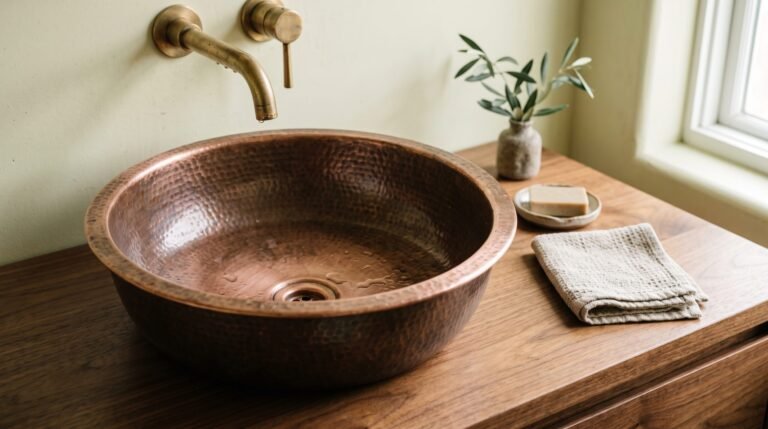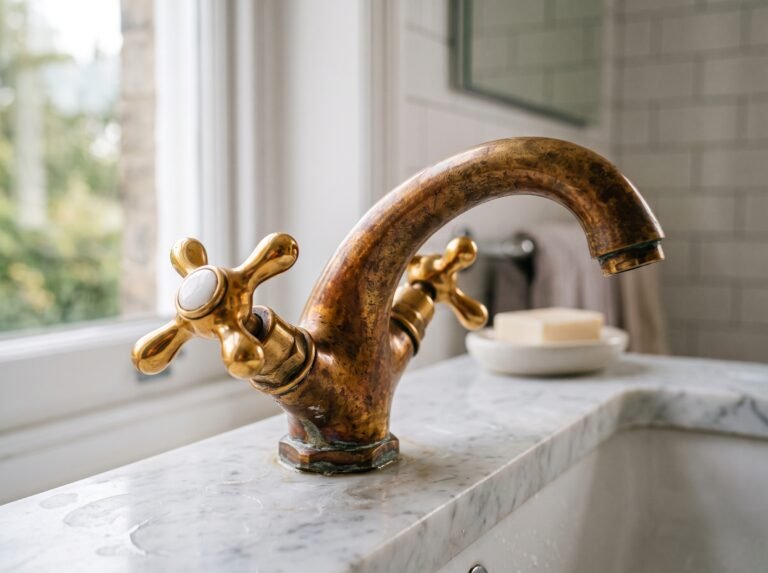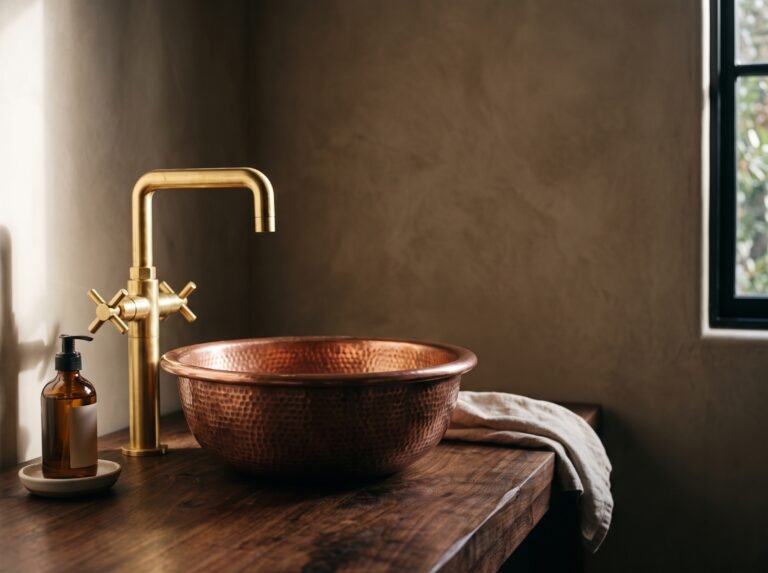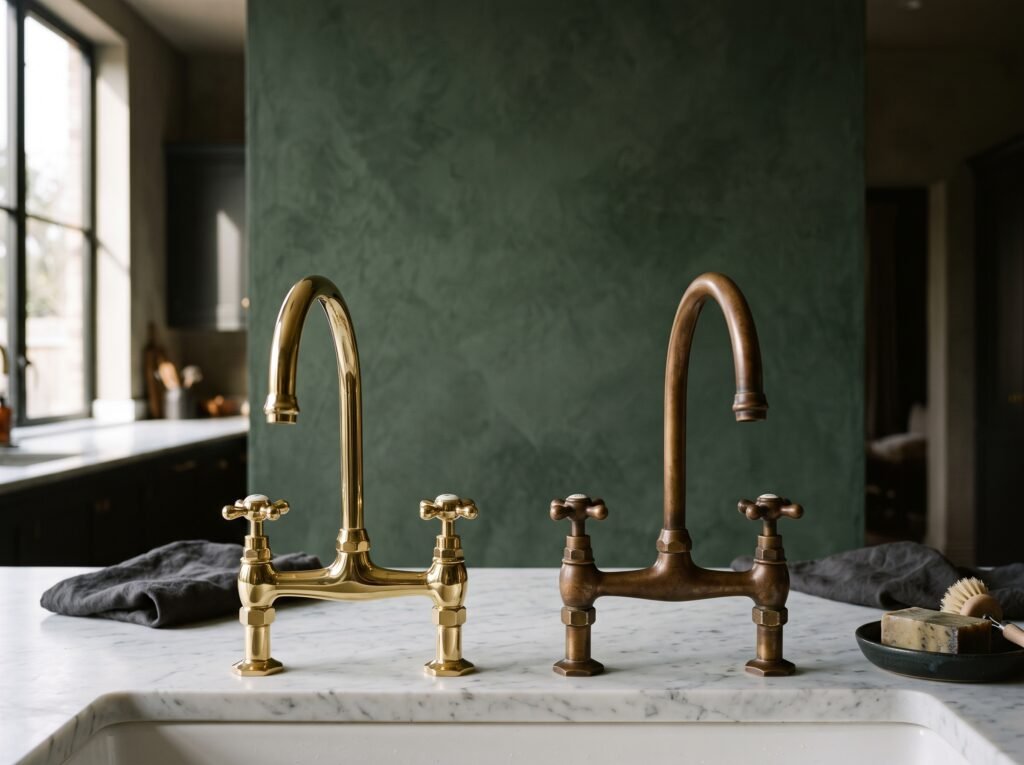
Choose unlacquered brass if you want the metal to darken into a warm, uneven patina and you are happy to polish it when you want it bright, and lacquered brass if you want it to stay bright and even with little more than a wipe. The catch with lacquer is that it can never be polished, and when it wears or chips it has to be stripped or redone.
This guide compares unlacquered brass and lacquered brass side by side: how each changes, how to clean each, how to tell which one you have, and which suits a kitchen or bathroom. In September 2026 we also read every brass listing at five workshops, 653 in all, and found that most handmade brass is sold unlacquered.
What is the difference between unlacquered and lacquered brass?
Lacquered brass has a clear coat sealed over the metal, so air and water never touch the brass. Unlacquered brass has no coating at all, so the metal itself reacts with air, water and hands.
Kingston Brass, the faucet maker, describes lacquer as a protective sealant that acts as a barrier against air and moisture, the two things that lead to tarnish, and unlacquered brass as brass in its natural state without any protective coatings. Armac Martin, a British brass hardware maker, calls unlacquered brass a living finish, one that develops a patina over time as it oxidizes with the air and meets moisture.
On a solid brass piece, the difference is only what sits on top, and that decides how the piece will look in five years.
How does each finish change over time?
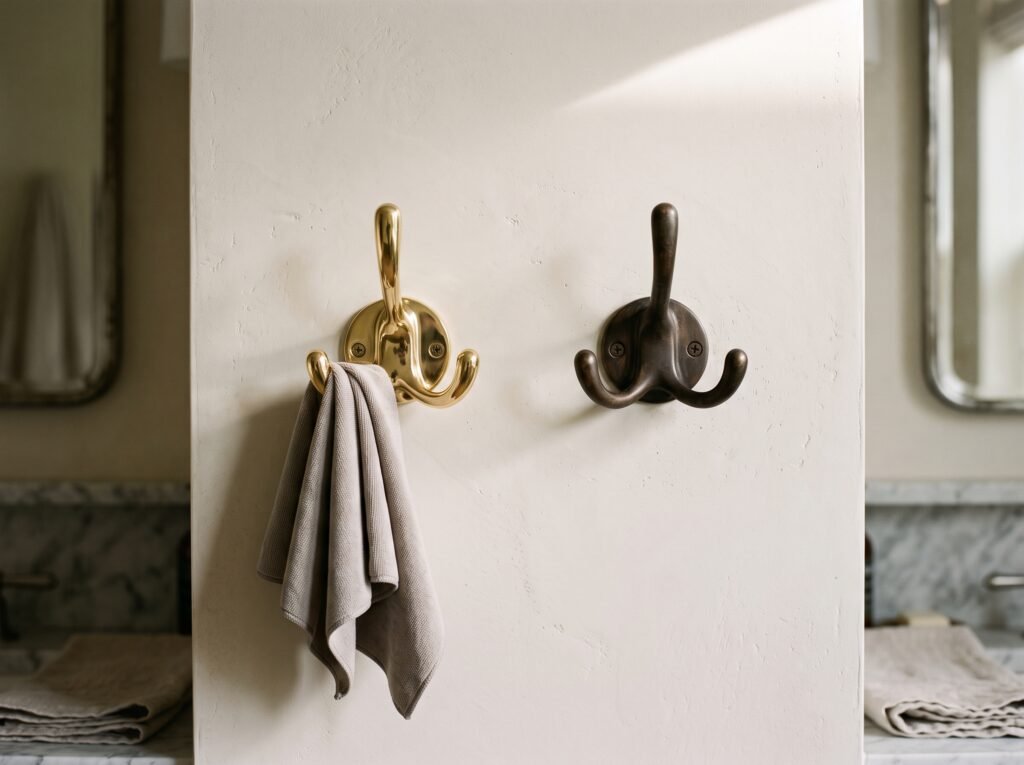
Unlacquered brass starts bright and darkens toward bronze and brown, fastest where it is touched and splashed. Lacquered brass stays bright and even while the coat is whole, and where the coat wears through, the bare brass starts to patina on its own.
Kingston Brass says unlacquered brass begins with a bright, shiny finish similar to lacquered brass but darkens to rich, deeper tones of bronze and brown as it ages. Lacquer holds that first look, but not forever in every spot. Plank Hardware explains that if the lacquer does eventually wear in a high-contact spot, the exposed brass will begin to develop patina in that area, and a handle used forty times a day wears faster than one used twice.
So both finishes can end up with darker patches. On unlacquered brass it happens everywhere, gradually, and darkest where the piece is used most. On lacquered brass it happens late, and only where the coat has gone.
How do you clean lacquered and unlacquered brass?
Clean both the same way day to day: a soft cloth, water and a little mild soap, then dry the piece. The difference is polish, which unlacquered brass can take whenever you want it bright and lacquered brass must never touch.
For lacquered brass, Armac Martin advises the occasional use of a damp cloth and mild detergent, with the hardware dried thoroughly to prevent staining. Kingston Brass warns against abrasive cleaners or pads, which can scratch the lacquer and expose the brass underneath. Polish is the real danger: on lacquered brass, Plank Hardware says metal polishes strip or cloud the protective coating, leaving an uneven surface that’s difficult to repair.
Unlacquered brass is the one you can polish. Kingston Brass notes that regular polishing with a good brass cleaner is enough, but adds that this may void the warranty for your specific fixture or hardware, so check yours first. Our guide on how to clean unlacquered brass covers the full routine, piece by piece.
How can you tell if brass is lacquered or unlacquered?
Start with the listing: unlacquered pieces usually say so, and brass sold as polished, satin or brushed is usually lacquered. Finish names are not consistent between makers, though, so when a listing does not say “lacquered” or “unlacquered” in plain words, ask.
Forge Hardware Studio notes that most items listed as polished brass, satin brass or brushed brass will generally be lacquered, and that items which are unlacquered will specifically say so. Names like “antique brass” are where it gets confusing. At Plank Hardware, Satin Brass, Antique Brass, Aged Brass and Heirloom Brass are all lacquered finishes. At Zayian, the antique brass bridge faucet below is finished without lacquer, intentionally. Same name, opposite finish.
On a piece you already own, time tells you. Brass that has darkened unevenly over the months is almost certainly unlacquered, or lacquered with the coat worn through.

Which finish do the workshops we list sell?
Most of it is unlacquered, and lacquered brass is rare. If you want lacquered brass from a handmade workshop, you usually have to find one of the few pieces that offer it, or ask before you order.
What the listings say. In September 2026 we read every brass listing at Zayian, CopperKesh, Rod & Rails, Kinycraft and Artihand: 653 products with brass in the name, counted once where two stores list the same piece. 425 of them say they are unlacquered. Only 9 let you choose lacquered or unlacquered on the same piece: five hammered brass sinks at CopperKesh, and two faucets each at Zayian and Kinycraft. 101 listings offer a finish choice of some kind, and the choices they offer most are unlacquered brass (89), antique brass (55), aged copper (43) and chrome (42). None mentions a PVD coating.
Some workshops make the point themselves. Rod & Rails says of its hammered cup pull: this isn’t brass-plated or lacquered. That is typical of small brass workshops, which sell the raw metal and let it age.


Which should you choose for a kitchen or bathroom?
Choose lacquered brass if you want an even look with the least upkeep in a busy, wet room. Choose unlacquered brass if you like the patina and accept that handles and spouts will darken first, knowing you can always polish it back.
Kingston Brass leans toward lacquer for wet rooms, saying lacquered brass is generally better suited for high-moisture areas like bathrooms and kitchens where durability and ease of maintenance are priorities, while unlacquered brass is chosen for its looks. Keep in mind that lacquer in a wet room still needs drying, and it is the busy spots, a faucet handle or a cabinet pull, where lacquer wears first.
Here is the comparison at a glance:
| Question | Unlacquered brass | Lacquered brass |
|---|---|---|
| When new | Bright brass | Bright brass under a clear coat |
| Over time | Darkens toward bronze and brown, fastest where touched | Stays bright until the coat wears, then bare spots patina |
| Everyday cleaning | Soft cloth, water, mild soap, then dry | Damp cloth, mild detergent, then dry thoroughly |
| Polish | Yes, whenever you want it bright | Never, polish strips or clouds the coat |
| To change the look later | Wax slows the patina; polish restores the shine | Strip the lacquer with an acetone-based remover |
| At the workshops we list | 425 of 653 brass listings | An option on 9 pieces |
Can you remove lacquer from brass, or slow a patina down?
Yes to both. Lacquer comes off with an acetone-based remover, after which the brass behaves like unlacquered brass, and a thin coat of wax on unlacquered brass slows the patina without sealing it.
Howard Products, a maker of brass polish, says any acetone-based lacquer/paint remover will take off the lacquer coating, and that some are sold as brass lacquer remover. Follow the remover’s label for ventilation and gloves. If lacquer begins to chip or wear off, Kingston Brass suggests seeking professional advice on whether it is an option to reapply the lacquer or if you should remove it completely. Check the fixture’s warranty before you strip it.
For unlacquered brass, wax is the middle ground. Zayian’s care note on its antique brass faucet is to apply a thin coat of natural beeswax or Renaissance Wax every 3-6 months to slow the patina.
Can you get a discount on unlacquered brass pieces?
Yes, at three of the workshops we list. In September 2026 Rod & Rails and CopperKesh each had a working code for 10% off their whole store, and Zayian was offering free worldwide express shipping.
We put every code through a real checkout before listing it. The Rod & Rails code took 10% off a single $280 tub filler with nothing else in the basket, and the CopperKesh code took 10% off a single $250 pendant, so neither had a minimum to reach. Most of the Rod & Rails catalogue is unlacquered brass, from cup pulls to shower rails. Codes expire, so check the date each one was last tested on the Rod & Rails, CopperKesh and Zayian store pages, and read how we verify codes.
So, lacquered or unlacquered brass?
Buy unlacquered brass if you want a finish that changes with the house and can always be polished back, and lacquered brass if you want it to look the same for years with a damp cloth. With handmade pieces, expect unlacquered unless the listing offers a choice, and ask before you order if you want the other.
Browse unlacquered brass faucets and unlacquered brass cabinet hardware with the codes we have checked, and keep how to clean unlacquered brass for when it arrives.
About the authors. JGD Editors are the people who check every code on JustGetDeal in a real checkout before it goes on the site, and who read the workshops’ own listings for the facts in these guides.
Some links on JustGetDeal can earn us a commission. The price you pay is the same. Read the affiliate disclosure.
Get new tested codes by email
One email on Friday: the codes that passed our checkout test that week, the ones we pulled, and new guides. Quiet week, short email.