Copper is a pure metal, brass is copper with zinc added, and bronze is copper with tin added. That one difference sets the color of each, how fast each one darkens, and roughly what you pay, and it also explains why almost every fixture sold as bronze in this trade is brass with a dark finish over it.
This guide compares the three metals as they turn up in kitchen and bathroom fixtures. The prices and counts come from our own read of all 1,126 products at the five workshops we check, on 16 September 2026.
What is the difference between copper, brass and bronze?
Copper is an element, so a copper sink is one metal all the way through. Brass and bronze are both copper alloys: brass adds zinc, bronze adds tin.
Metal Supermarkets, a metals stockist, describes copper as a pure elemental metal, brass as an alloy of copper and zinc and bronze as primarily an alloy of copper and tin, noting that arsenic, phosphorus, aluminium, manganese and silicon turn up in some bronzes too.
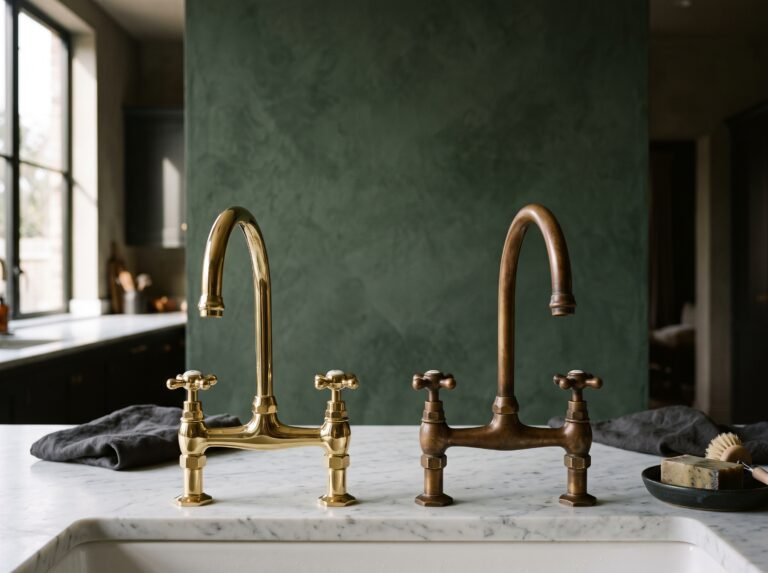
The proportions decide the shade. Sequoia Brass & Copper says bronze typically consists of approximately 88% copper and 12% tin, and that brass primarily consists of copper and zinc, with high strength brass containing ≥39% zinc. More zinc gives a paler, yellower brass, which is why two unlacquered brass taps from different workshops can look like different metals.
Here are the three side by side:
| Copper | Brass | Bronze | |
|---|---|---|---|
| Made of | The pure element | Copper plus zinc | Copper plus tin, about 88% to 12% |
| Color | Reddish brown | Red through to yellow, gold-like | Dull gold, browner than brass |
| How it ages | Darkens, then greenish verdigris | Darkens and goes more golden | Darkens toward brown and black |
| Hardness | Softest of the three | Harder than copper | Harder than copper, good in seawater |
| Cost | Usually the dearest | Usually the cheapest | Dearer than brass |
| In these catalogues | 365 listings | 682 listings | 27 listings, nearly all brass underneath |
Sources for the top four rows: Metal Supermarkets and Sequoia Brass & Copper. The last row is our own count.
What color is each metal in a real room?
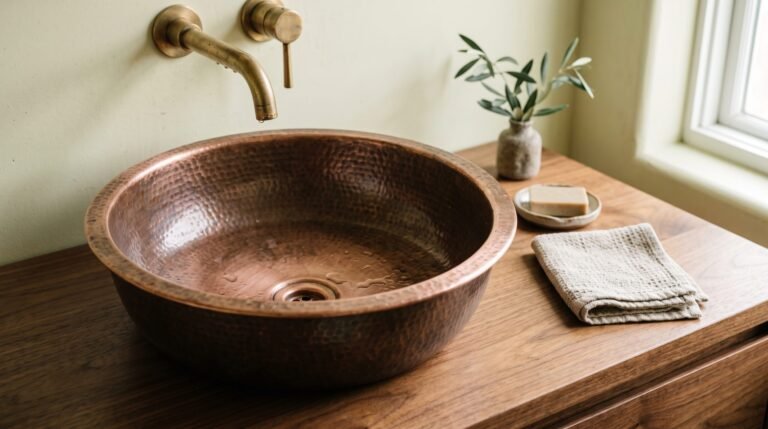
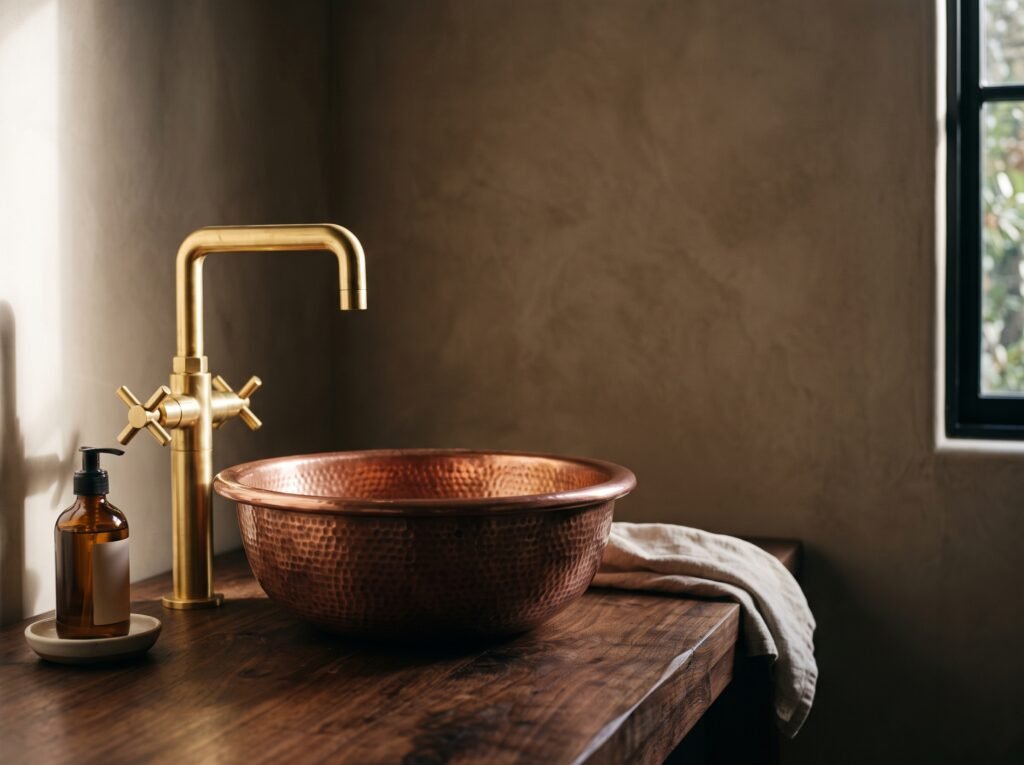
Copper reads warm and red, brass reads yellow and gold, and bronze sits between them as a brown gold. Under warm bulbs the three move closer together, which is why a copper sink and a brass tap can work in one room.
Metal Supermarkets gives copper its signature reddish-brown hue, says brass has a brighter, more yellowish appearance and can range in color from red to yellow, and describes bronze as characterized by its dull gold color.


How does each metal age?
All three darken, because all three are mostly copper. Copper goes furthest, from bright metal to brown and eventually to green, while brass mostly deepens toward a richer gold and bronze goes brown and black.
The green stage has a name and a timetable. The National Park Service defines patina as a film or incrustation, usually green, produced by oxidation on the surface of old bronze and often esteemed as being of ornamental value, and says of the Statue of Liberty that the oxidation process took about 25 to 30 years to fully change from bronze to green. Metal Supermarkets describes the same end point for copper indoors, saying it will gradually oxidize, forming a greenish patina (verdigris).
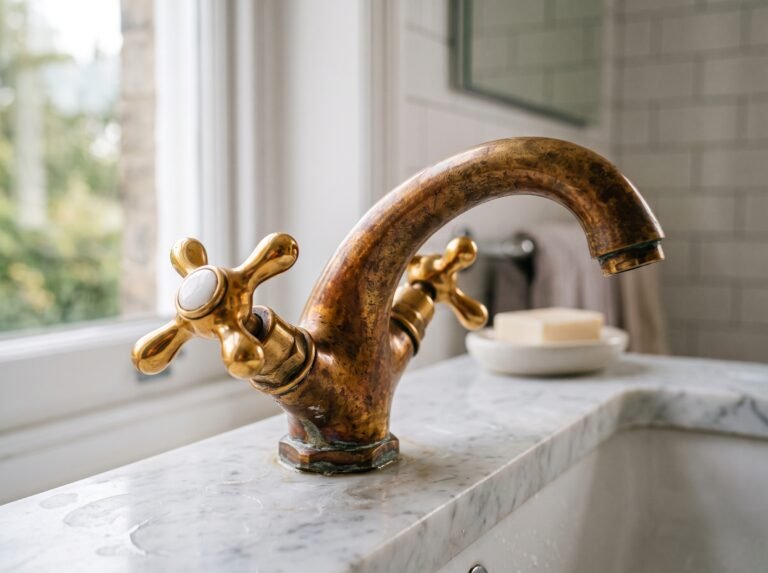
Brass moves in a narrower range. Hamilton Sinkler, which sells solid metal hardware, says polished unlacquered brass will become richer and more golden in color with exposure to air and touch, losing some of its mirror polish along the way. Whether yours does that at all depends on the lacquer, which we cover in unlacquered vs lacquered brass.
A green statue is a slow outdoor story, not what a kitchen tap does in a year. Indoors, expect darkening at the handles and around the spout first, and see how to clean unlacquered brass or how to clean a copper sink for keeping it even.
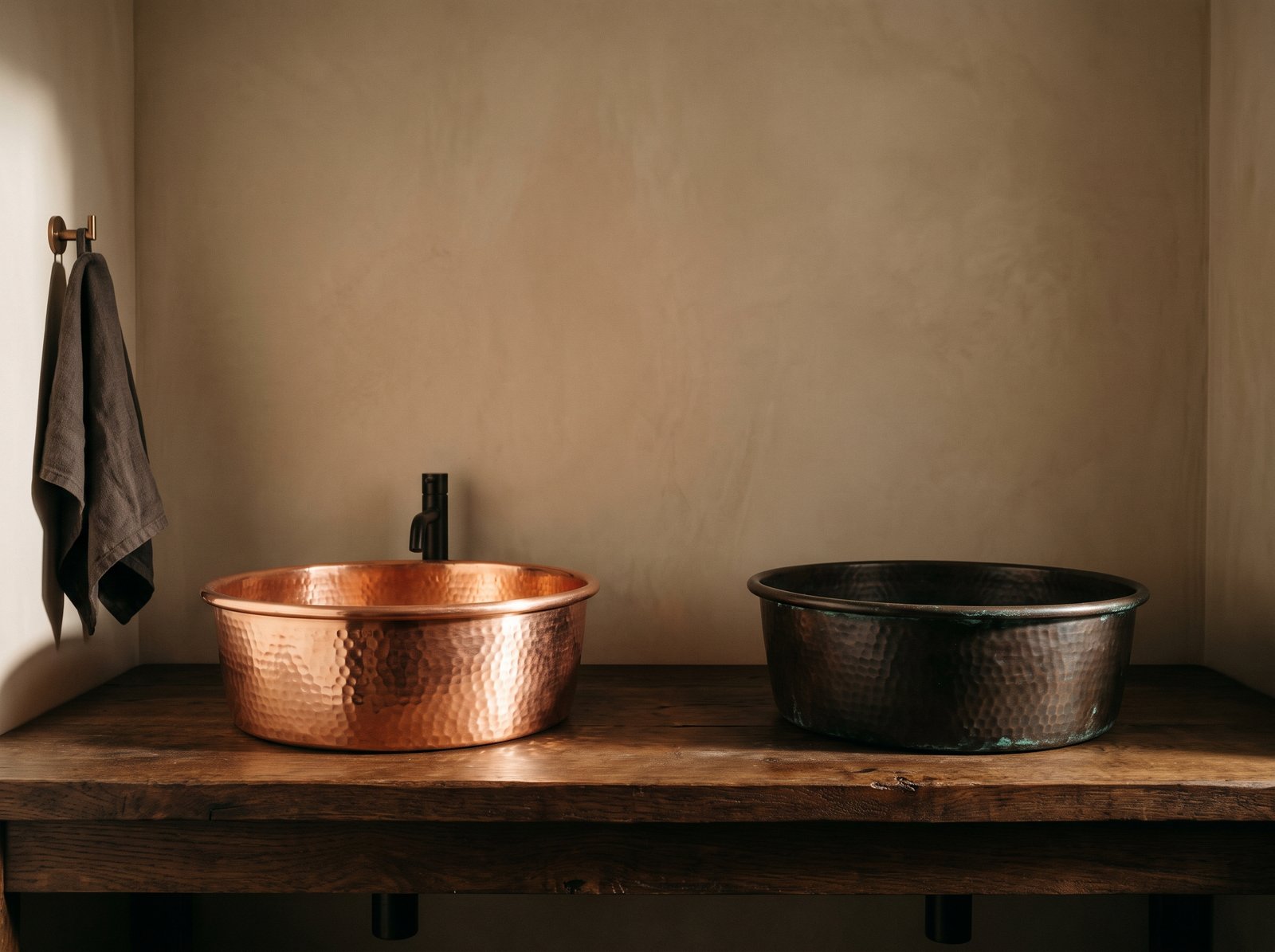
Is the bronze in these shops really bronze?
Almost never. Of the 27 listings with bronze in the title at the five workshops we check, 23 say brass in the title or the description, 17 use the words oil rubbed, and not one says solid bronze or cast bronze.
What we found. On 16 September 2026 we read all 1,126 products at CopperKesh, Zayian, Artihand, Kinycraft and Rod & Rails. Bronze appears in 27 product titles: 14 at CopperKesh, 8 at Zayian and 5 at Artihand, with none at Kinycraft or Rod & Rails. The descriptions then contradict the titles. A $100 toilet roll holder sold as oil rubbed bronze says it is crafted entirely from premium solid brass. A $100 bronze pot rack says it is crafted from high quality solid brass. A $189 oil rubbed bronze faucet says it is made from solid brass. None of this is dishonest, because oil rubbed bronze has always been the name of a finish rather than a metal, but it does mean you are buying brass.
That matches how the finish is made. Hunker describes oil rubbed bronze this way: the finish is commonly made from brass, then plated with copper and treated with a slick, dark solution.


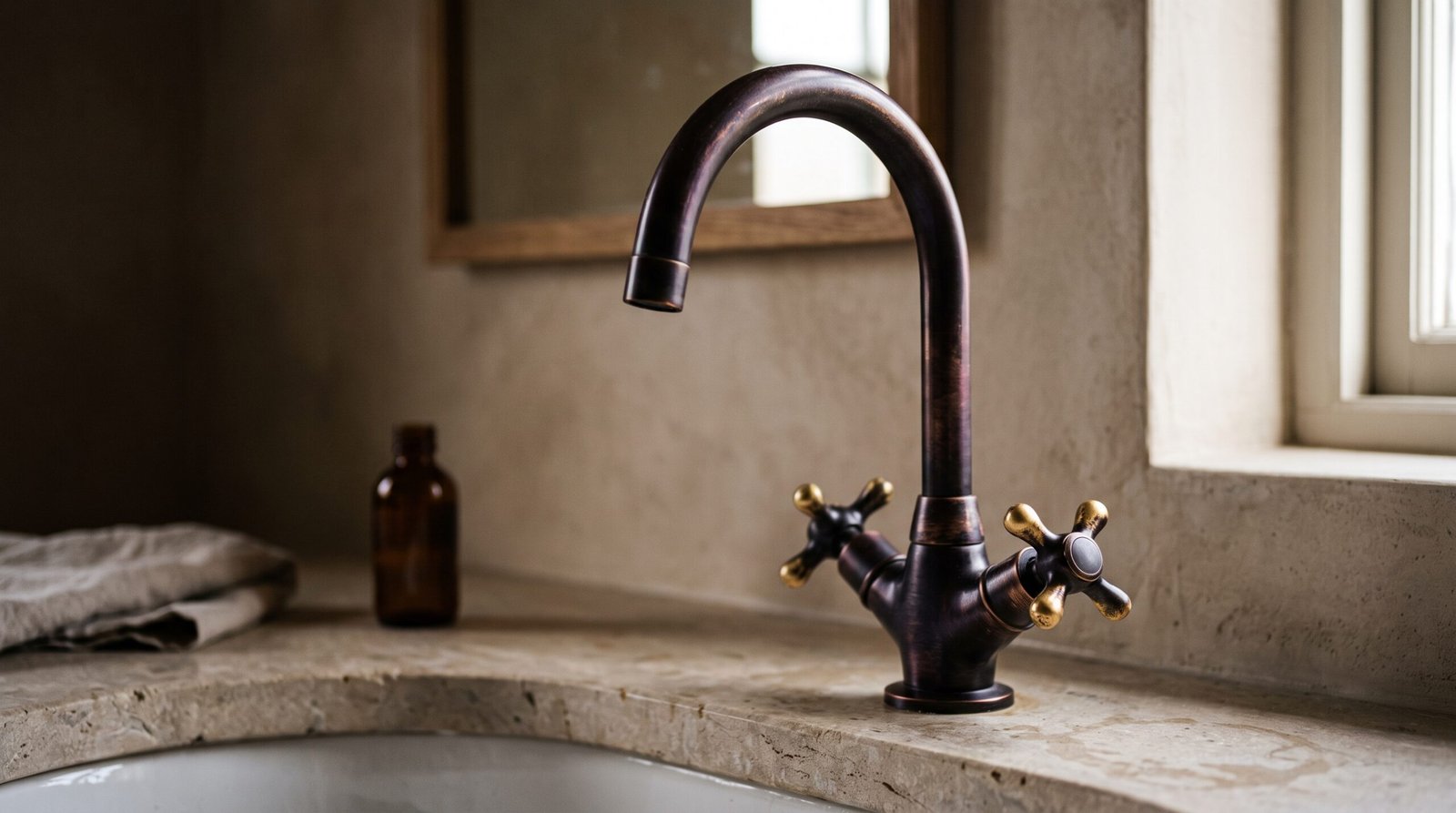
Does oil rubbed bronze wear off?
Yes, and that is the point of it. The dark coating thins where hands and water touch it, letting the brass underneath show through at the edges and the handles.
Hamilton Sinkler puts oil rubbed bronze in the same family as unlacquered brass, saying that natural brass, polished unlacquered brass, German silver and oil rubbed bronze are all living finishes, intended to transform with age and use. On oil rubbed bronze specifically it says that over time and use, the oil coating and patina layer will wear away to reveal hints of the brass underneath, and that periodic waxing will maintain the original look for longer and slow the wearing process.
So the question to ask a workshop is not whether a piece is bronze. Ask what metal it is made from, whether the dark color is a finish, and whether it is lacquered, because those three answers tell you what the piece will look like in three years.
Which costs more, copper or brass?
In raw metal, copper is the dearest of the three. In the fixtures these workshops actually sell, copper and brass land within a few dollars of each other, because the price is mostly the making rather than the metal.
Metal Supermarkets says copper is typically the most expensive of the three red metals and that bronze is usually more expensive than brass. Our own reading of the catalogues shows the labour flattening that out. Median starting prices for copper against brass: sinks $250 against $269, bathtubs $4,200 against $4,000, wall and ceiling lights $199 against $184, and bathroom accessories $107 against $105. The gap between two copper sinks of different sizes is far wider than the gap between copper and brass.
Where the metals do separate is choice. Brass appears in 682 product titles against 365 for copper, so a brass faucet gives you a much longer list to pick from, while copper dominates lighting and sinks.
Which metal lasts best in a kitchen or bathroom?
All three hold up in a wet room, and none of them rusts, since rust needs iron. Bronze is the hardest and the best in salt air, brass resists corrosion well, and copper is the softest, so it marks more easily.
Metal Supermarkets credits bronze with increased hardness and resistance to corrosion, especially against seawater and brass with good corrosion resistance. For a coastal bathroom or an outdoor shower that is worth knowing, though in practice your choice is between brass and copper, since solid bronze is not what these workshops make.
Softness matters most on a sink. A copper basin takes small dents and scratches that blend into a hammered surface and stand out on a smooth one, which is one reason hammered finishes are so common. That trade is covered in is a copper sink a good idea.
Can you mix copper and brass in the same room?
Yes, and it looks deliberate when one metal leads. Pick the metal for the big piece first, then let the smaller pieces repeat it or contrast with it on purpose.
The catalogues make one pairing easy: copper leads in sinks and lighting, brass leads in faucets and accessories, with 243 brass bathroom and kitchen accessories against 8 in copper. A copper sink with a brass tap is the commonest combination in this trade, and both metals darken with age, so they meet in the middle rather than drifting apart.
What breaks it is finish, not metal. A polished lacquered brass tap beside an unlacquered copper sink will look wrong within a year, because one keeps moving and the other does not.

Can you get a discount on copper or brass fixtures?
Yes, at three of the five workshops. In September 2026 CopperKesh had a code for 10% off its whole store, Rod & Rails had one for 10% off its brass hardware, and Zayian was offering free worldwide express shipping.
We test every code in a real checkout before it goes on the site. On the $299 brass faucet above, 10% is $29.90, and on a $190 copper vessel sink it is $19. Codes expire, so check the date each one was last tested on the CopperKesh, Rod & Rails and Zayian store pages, and read how we verify codes.
So which metal should you choose?
Choose copper when you want warmth and you accept that it will darken, and brass when you want a gold tone and a much wider choice of taps and hardware. Treat bronze as a color rather than a metal, and ask what is underneath before you pay for it.
Browse copper farmhouse sinks, hammered copper sinks, unlacquered brass faucets and unlacquered brass cabinet hardware with the codes we have checked.
About the authors. JGD Editors are the people who check every code on JustGetDeal in a real checkout before it goes on the site, and who read the workshops’ own listings for the facts in these guides.
Some links on JustGetDeal can earn us a commission. The price you pay is the same. Read the affiliate disclosure.
Get new tested codes by email
One email on Friday: the codes that passed our checkout test that week, the ones we pulled, and new guides. Quiet week, short email.