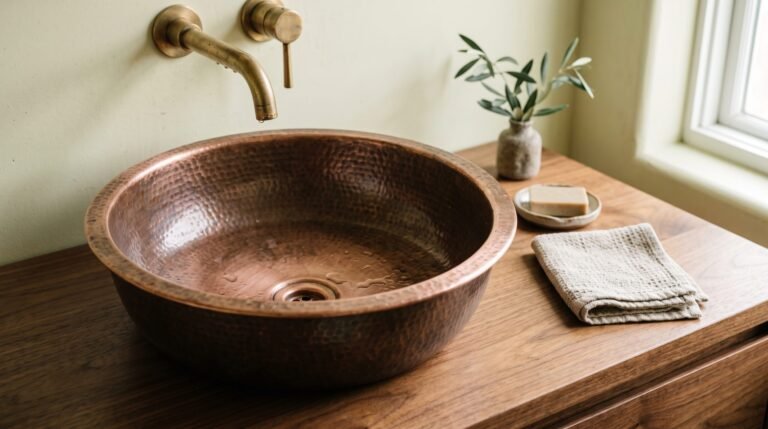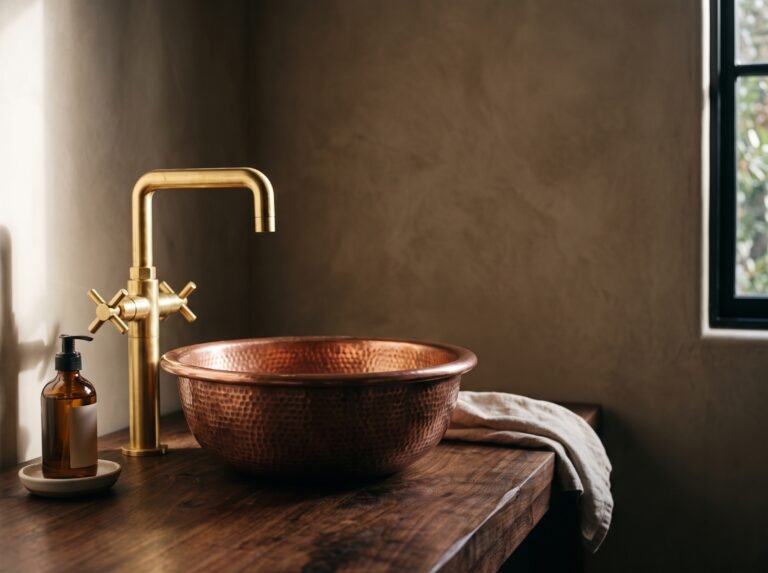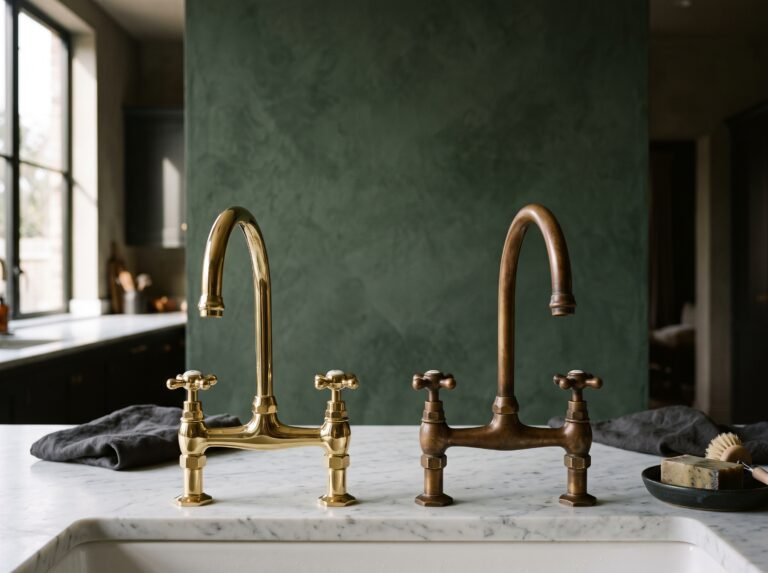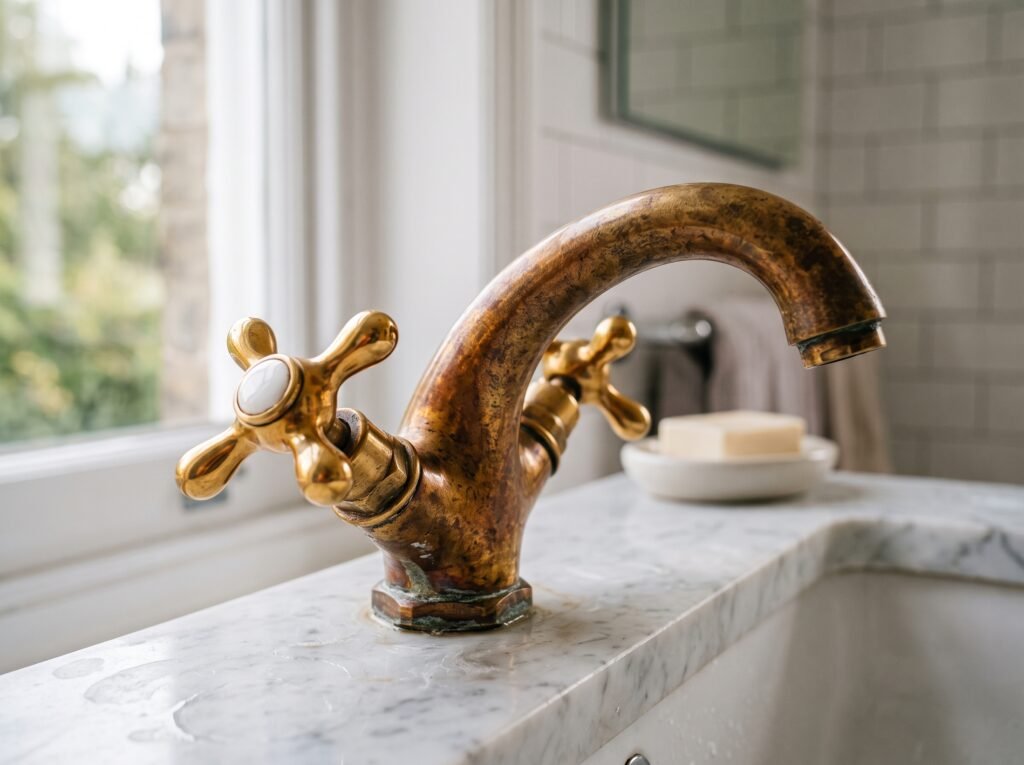
Does unlacquered brass tarnish? Yes, from the day it is fitted, and every maker who sells it says so in writing. There is no coating on the metal, so air, water and the oil on your hands reach the brass directly, and the colour starts moving within the first few weeks. It darkens through gold into amber and brown, it keeps the marks of the hands that use it, and indoors it almost never turns the green people are afraid of.
This guide covers how fast the change happens, what each stage looks like, the difference between a normal dark patina and the green powder that is a real problem, and what makes the whole thing move faster or slower. It also covers what the workshops themselves tell you: in September 2026 we read 465 unlacquered brass listings at seven small workshops, and 330 of them warned the finish would darken while 65 explained how to clean it.
Does unlacquered brass tarnish, or is that a myth?
It tarnishes, and the makers are unusually direct about it. Every large manufacturer that sells the finish writes the change into its warranty, which is the clearest proof that this is designed behaviour rather than a fault.
California Faucets puts it in a single line, saying that living finishes are expressly designed to tarnish and otherwise change appearance over time, and names Polished Brass Uncoated among them. Waterstone goes further and refuses to cover it, saying Waterstone does not offer a warranty on living or gold finishes and that tarnishing or excessive wear of these finishes is therefore, not a defect, but a normal process, which is unavoidable.
Perrin & Rowe, part of House of Rohl, states plainly that we do not offer an express warranty on the following finishes for any of its products: unlacquered brass, and explains that unlacquered brass is designed to age and develop a unique patina over time, enhancing its character and elegance. This is a natural occurrence and is not considered a defect. Newport Brass says the same about its living range: uncoated and living finishes such as Unlacquered Brass – Living (03N) and Weathered Copper (08W) do naturally weather and change color over time. Living and uncoated finishes are not warranted.
Read that as information rather than a warning. The finish is excluded because it is doing what it was sold to do, and the same makers still warrant the working parts of the tap.
How long does unlacquered brass take to change colour?
The first softening shows in days to a couple of weeks, real colour arrives over three to six months, and the patina keeps deepening for a year or more before it settles. Nothing about it is sudden, which is why people who see it every day often notice only when they compare a photo.
Nostalgic Warehouse, which makes unlacquered brass hardware, says that from the moment it’s installed, unlacquered brass begins to oxidize, and that it darkens as it’s exposed to air, moisture, and the oils from your hands. Hamilton Sinkler describes the family it belongs to, saying natural brass, polished unlacquered brass, German silver, and oil rubbed bronze are all living finishes, intended to transform with age and use.
The most useful account is from someone who lived with it. Writing after twelve months with unlacquered brass cabinet hardware, Cathy at The Grit and Polish reported that the unlacquered brass (also called an unfinished, living, or raw brass finish) ages and patinas and gets better with time, and noticed something a catalogue never mentions: you can tell which cabinets and drawers are used the most just by the patina on the hardware.
Here is the whole guide in one place:
| Stage | What you see | What is happening |
|---|---|---|
| First days | Fingerprints and water spots that wipe off, then return | The bare metal is reacting where it is touched and wetted |
| Two to six weeks | The mirror shine dulls, the gold turns warmer | The first oxide layer is forming across the surface |
| Three to six months | Honey and amber tones, uneven across the piece | Touched areas stay bright, still areas darken |
| One year | Settled brown with lighter wear marks | The patina is mature and changes slowly from here |
| Several years | Deep brown, almost bronze in still corners | A stable layer that protects the metal underneath |
| Any time | Loose light green powder in spots | Not normal patina, see the section below |
Treat those as ranges, not promises. A tap used by four people in a hard water house moves faster than the same tap in a guest bathroom nobody enters.
Does unlacquered brass turn green?
Indoors, on a tap or a handle that gets used and dried, it very rarely does. The normal end state is brown, and the green that worries people is a different thing with a different cause, which conservators treat as a problem rather than a finish.
The Canadian Conservation Institute draws the line clearly. A healthy surface is stable: stable patinas on these metals are generally coherent, adherent, and smooth. The problem version looks and behaves differently, because active corrosion of copper and copper alloys is characterized by the rapid development of a light green powder erupting in spots over the surface. It also needs damp to get going, and the Institute notes that bronze disease occurs where the RH is high (i.e. 55% and above).
So the test is texture, not colour. A smooth dark surface that feels like metal is the patina you bought. A powder that sits in spots, that you can rub off and that comes back, means water is sitting somewhere it should not, usually around a fixing, a threaded joint or the underside of a piece in a bathroom with no extractor.
Outdoors is a different story. A brass or copper piece left in the rain does eventually go green, which is why the green roof is the image everyone carries, and why an outdoor shower or garden tap ages nothing like a basin tap.
What speeds the patina up, and what slows it down?
Water left to dry on the surface is the fastest way to a blotchy finish, and hands are the second. Drying a piece after use, and waxing it a few times a year, is the whole of the maintenance if you want the change to be even.
Manufacturer care sheets agree on the negative list. Newport Brass says do not use any abrasive cleaners, alcohol, ammonia, detergents, or brass or silver polish on the Products, and to simply wipe with a soft, water dampened cloth. That matters more than any product you can buy, because most of the damage we see described comes from someone attacking a living finish with a cleaner meant for chrome.
For slowing the change, the Canadian Conservation Institute is blunt about what works: a wax coating will provide some protection against both the environment and handling. Wax is a delay, not a barrier. It buys months of slower change and needs redoing, which is the honest trade against lacquer, covered in our guide to unlacquered vs lacquered brass.
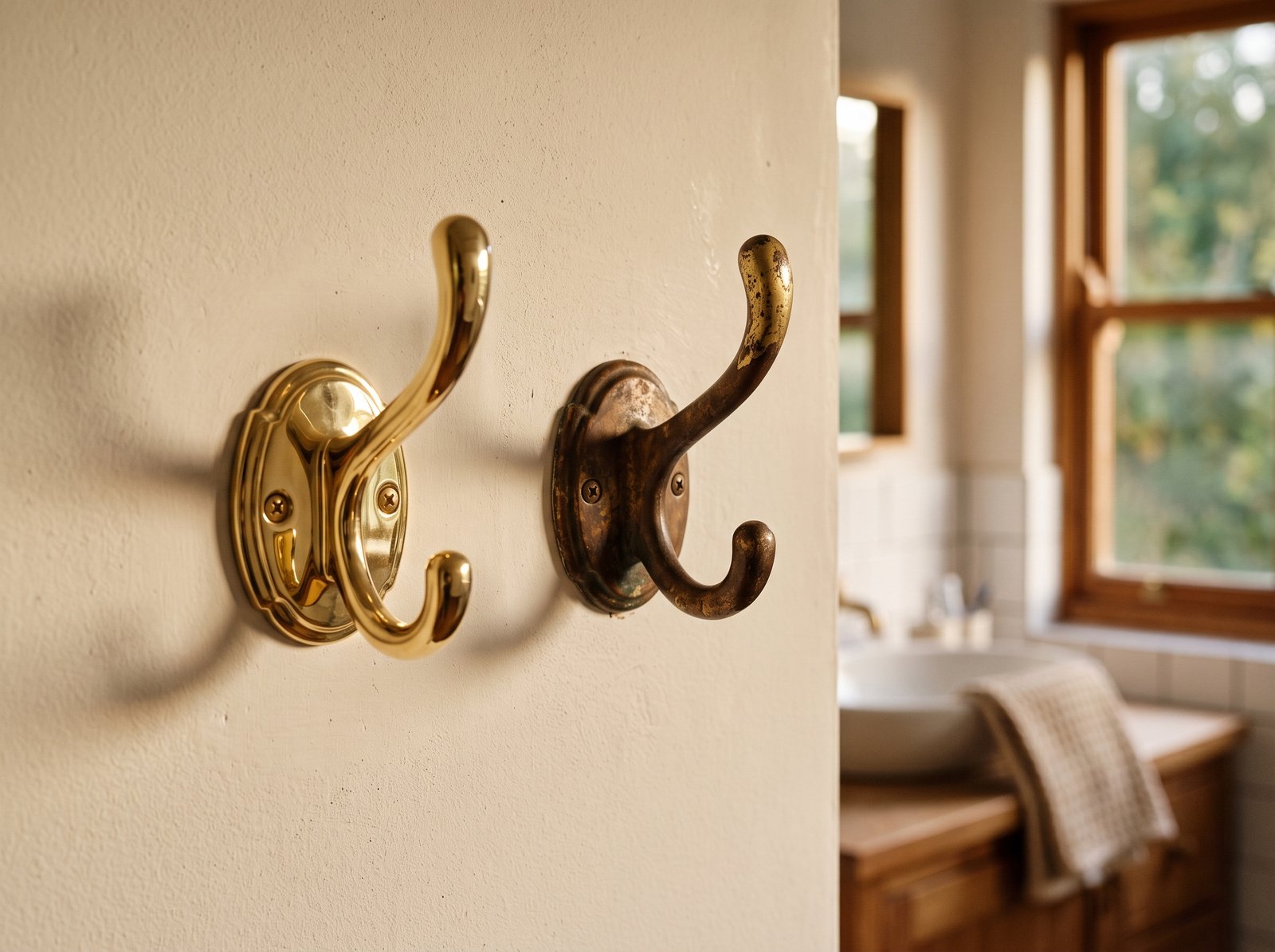
Four things push it faster: standing water, hard water minerals, humidity above about 55 percent, and frequent handling. Three things slow it: drying after use, ventilation, and wax. Nothing stops it except a coating.
Does tarnish damage the brass underneath?
No. On solid brass the tarnish is a thin surface layer, and the metal below is unchanged, which is why a tap that has gone dark for ten years can be polished back to gold in an afternoon.
The catch is what polishing costs you. The Canadian Conservation Institute describes it exactly: polishing, by contrast, is an abrasive operation that removes tarnish and some surface metal. A little metal goes with every polish, which is harmless on a solid brass tap you polish twice a year and not harmless on a thin plated one.
That is the real reason to care whether a piece is solid brass. Solid brass tarnishes on the surface and can be restored over and over. Brass plate has a thin brass layer over another metal, and once a polish wears through it, the piece is finished. If you want to work out which one you have, our guide on how to clean unlacquered brass shows the magnet and edge tests.
Will a bathroom age brass faster than a kitchen?
Usually yes, because a bathroom holds damp air for hours after a shower while a kitchen dries out between meals. The pieces that move fastest are the ones that stay wet: the base of a tap, the underside of a towel rail, the wall plate behind a hook.
This is also where the 55 percent humidity line matters. A bathroom without an extractor sits above it for long stretches, which is the condition the Canadian Conservation Institute associates with active corrosion. Running the fan is better brass care than any polish.
None of this argues against brass in a bathroom. It argues for wiping a tap dry after use, which takes three seconds, and for choosing where you accept fast change. A heated towel rail, for example, spends its life warm and dry, so it often ages more slowly than the tap a metre away.
What do the workshop listings actually tell you?
They tell you the brass will change, and then stop. In September 2026 we read every listing at seven small copper and brass workshops, 1,633 products, and of the 465 unlacquered brass listings, 330 said the finish would darken, 65 explained how to clean it, 56 said it could be polished back and 6 offered a lacquered version as an option.
Those 465 listings come from Zayian (160), The House of Brass (102), Kinycraft (55), CopperKesh (54), Rod & Rails (48), Artihand (42) and Moroccan Interior (4). The wording is usually a single line. A Zayian gooseneck basin tap at $190 says it is 100 percent solid unlacquered brass that naturally darkens over time, and a curved toilet paper holder at $95 says it is made to develop a rich natural patina. Both are accurate. Neither tells you to dry it, or what to do if the patina goes blotchy.
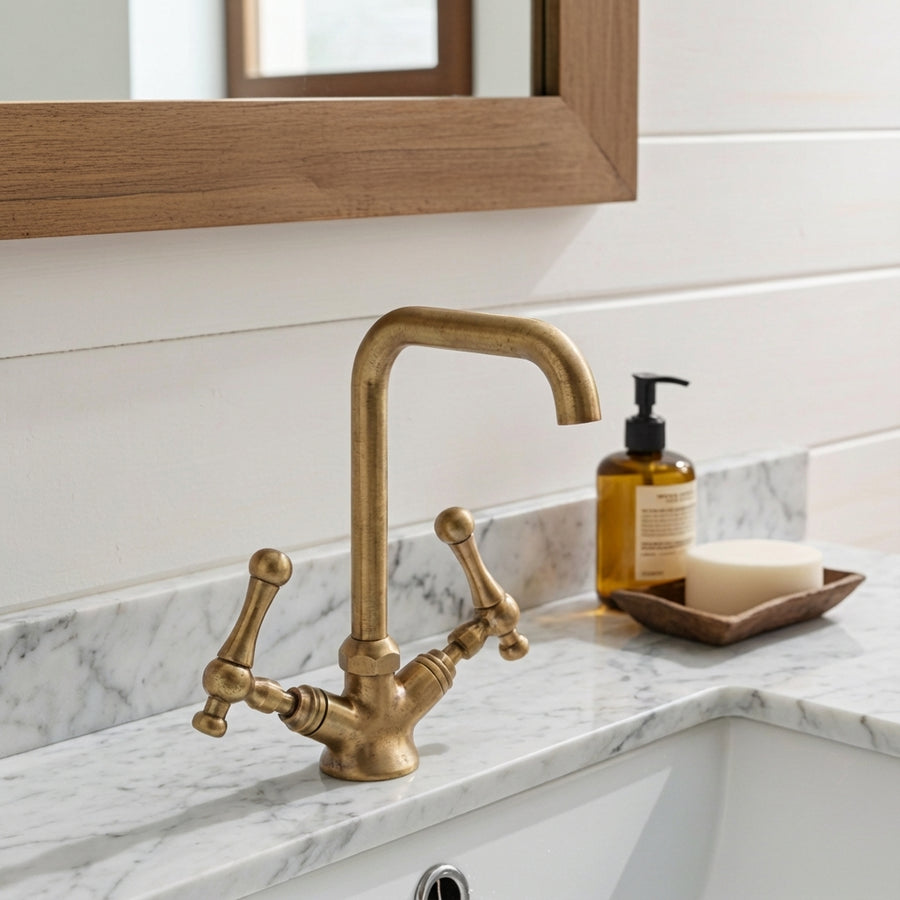
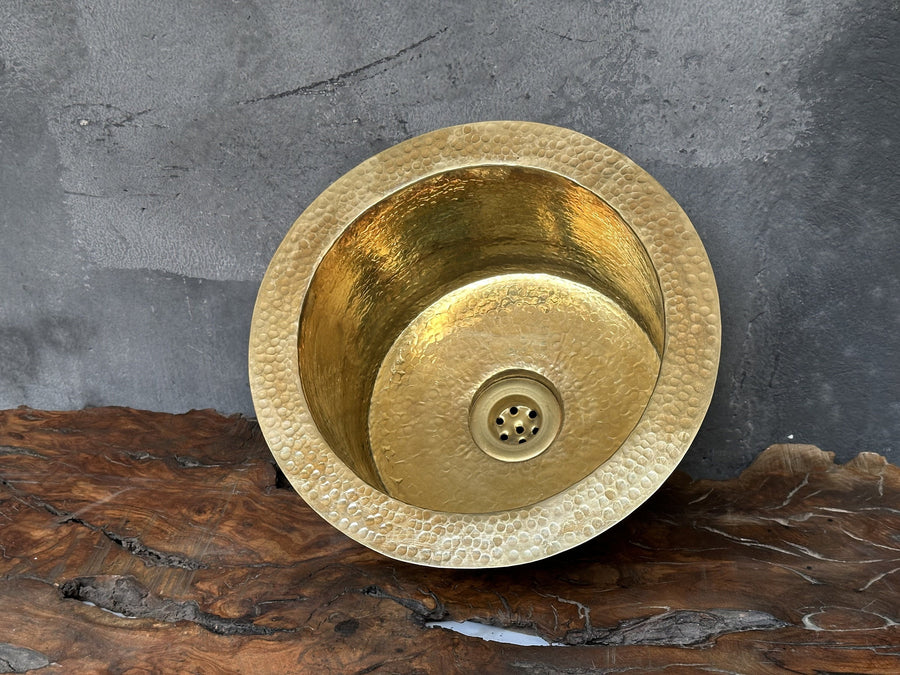
The lacquer choice is the rarest thing in the whole dataset. Six listings in 465 let you pick, one of them a hammered unlacquered brass bar sink at $189 at CopperKesh that offers lacquered or unlacquered on the same page. If you want the coated version of something, ask before you order, because the option usually exists in the workshop even when it is not on the listing.
Our full read, with the method and the dataset, is in the September 2026 listings study.
Can you get a discount on unlacquered brass pieces?
Yes, and the codes we publish are tested in a real basket before they go up. In September 2026 CopperKesh took 10 percent off the whole store and Zayian was running free worldwide express shipping.
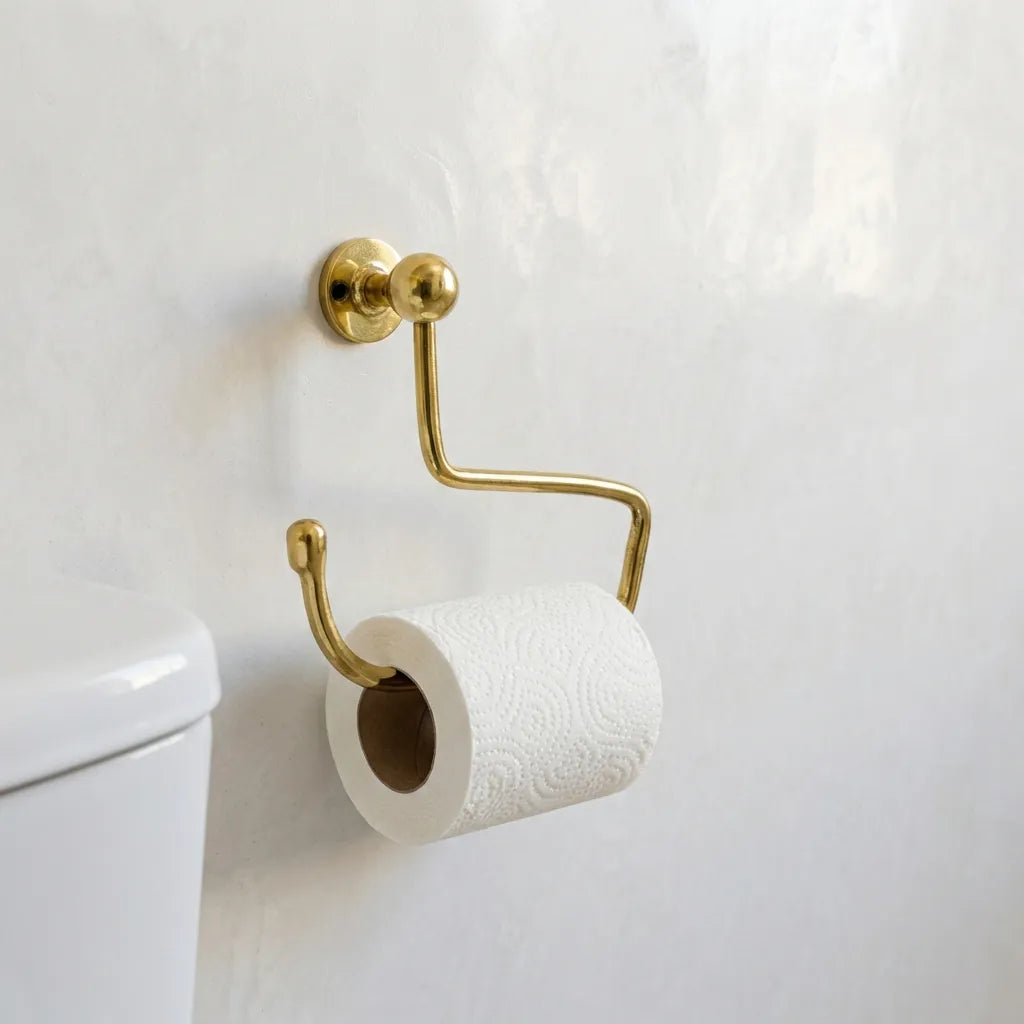
Ten percent off that $189 bar sink is $18.90, and off a $190 basin tap it is $19. Codes expire, so check the date each one was last tested on the CopperKesh and Zayian store pages, and read how we verify codes if you want the method.
So, does unlacquered brass tarnish, and should that change your mind?
It tarnishes, on purpose, and the makers exclude it from their finish warranties for that reason. It moves within weeks, settles after about a year, ends up brown rather than green indoors, and keeps a record of which handles your household actually touches.
Buy it if you like that. If you want the colour you saw in the showroom to be the colour in five years, buy lacquered and accept that the coating will eventually need redoing. Browse unlacquered brass faucets and aged brass bathroom taps with the codes we have checked, and read how to clean unlacquered brass before the first water spot makes you reach for the wrong bottle.
Get new tested codes by email
One email on Friday: the codes that passed our checkout test that week, the ones we pulled, and new guides. Quiet week, short email.