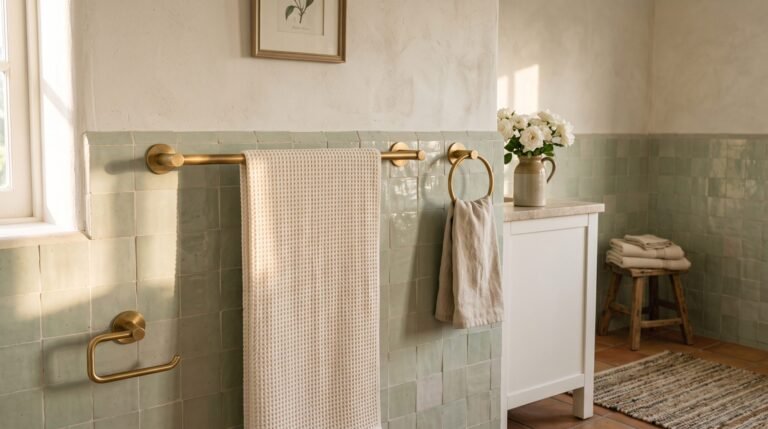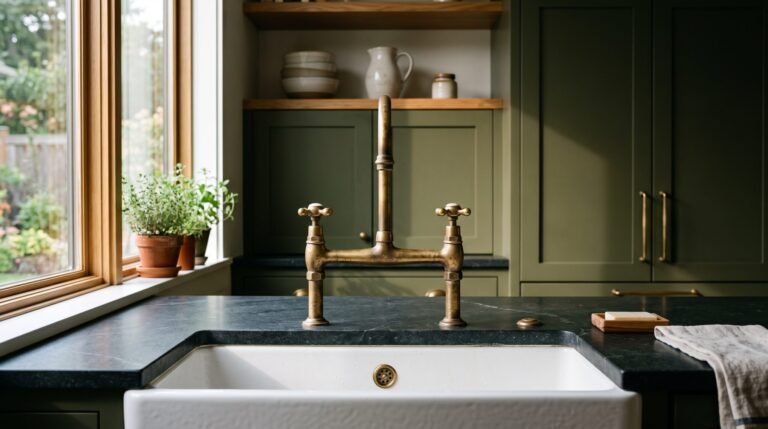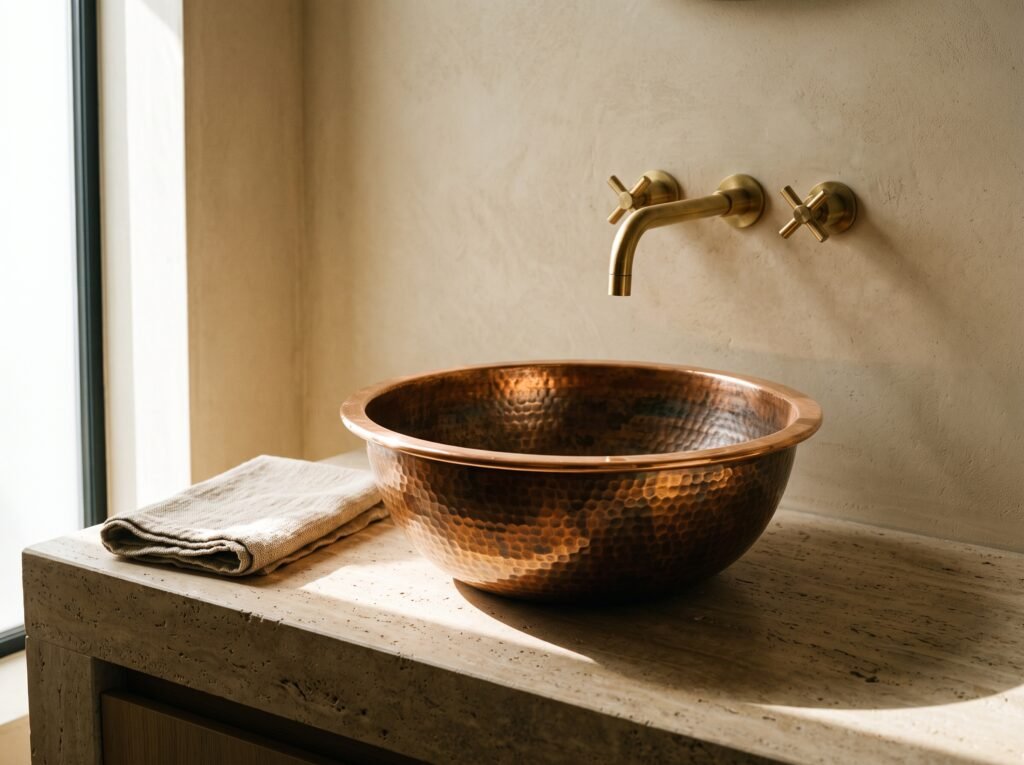
A copper sink is a good idea if you want a sink that will not rust or crack and you are happy to watch its color change over the years. It is a poor idea if you want it to look the same as the day it arrived, or if lemon, vinegar and bleach are part of how you clean.
This guide covers what a copper sink is really like to live with: the pros and cons, the care routine, what gauge to buy, and what copper sinks cost at the workshops we list. Everything about price and thickness below was read from those workshops’ own listings in September 2026.
What are the pros of a copper sink?
A copper sink does not rust, and its surface hides everyday wear better than a polished finish because the color keeps darkening around small marks. Bare copper also kills many common bacteria on its surface, which is part of why it has been used for sinks for so long.
- It hides wear. Scratches fade into the color over time. Sinkology, a copper sink maker, puts it plainly: scratches blend into the patina over time, making them less noticeable.
- It kills bacteria on contact. Copper alloys are registered with the US EPA as antimicrobial surfaces, and lab testing shows they kill more than 99.9% of certain bacteria within two hours when cleaned regularly. More on what that does and does not mean below.
- It is handmade, and its color recovers. The copper sinks at the workshops we list are made by hand, and a patch lightened by an acidic spill darkens again on its own.
- It suits more rooms than people expect. Farmhouse sinks for the kitchen, vessel bowls for the bathroom and small bar sinks all come in copper.
What are the cons of a copper sink?
The main cons are that copper reacts to what you put in it and its color never stops changing. A thin sink can also dent, and a handmade farmhouse sink is a real expense.
- Acids mark it. Lemon, vinegar, tomato and ketchup left in the sink lighten the finish, leaving a brighter patch.
- Harsh cleaners strip it. Bleach, steel wool and abrasive scrubbers take the patina off.
- It will not stay shiny. Copper darkens with air and water. If you want the look of the product photo forever, copper is the wrong material.
- Thin copper dents. The thickness matters, and it is covered in the gauge section below.
- It costs more. Farmhouse copper sinks at the workshops we list start at several hundred dollars and reach $1,700.
Are copper sinks hard to maintain?
No. Day to day, a copper sink needs warm water, mild soap and a soft cloth, and drying it after use keeps the color even. What takes attention is avoiding the few things that damage the finish, not a long cleaning routine.
A simple routine that works:
- Rinse the sink after use, especially after anything acidic.
- Wash it with a non-citrus dish soap and a non-scratch sponge, as Premier Copper Products recommends.
- Dry it with a soft towel if you want the color to stay even.
- Wax it now and then if you want to slow the color change.
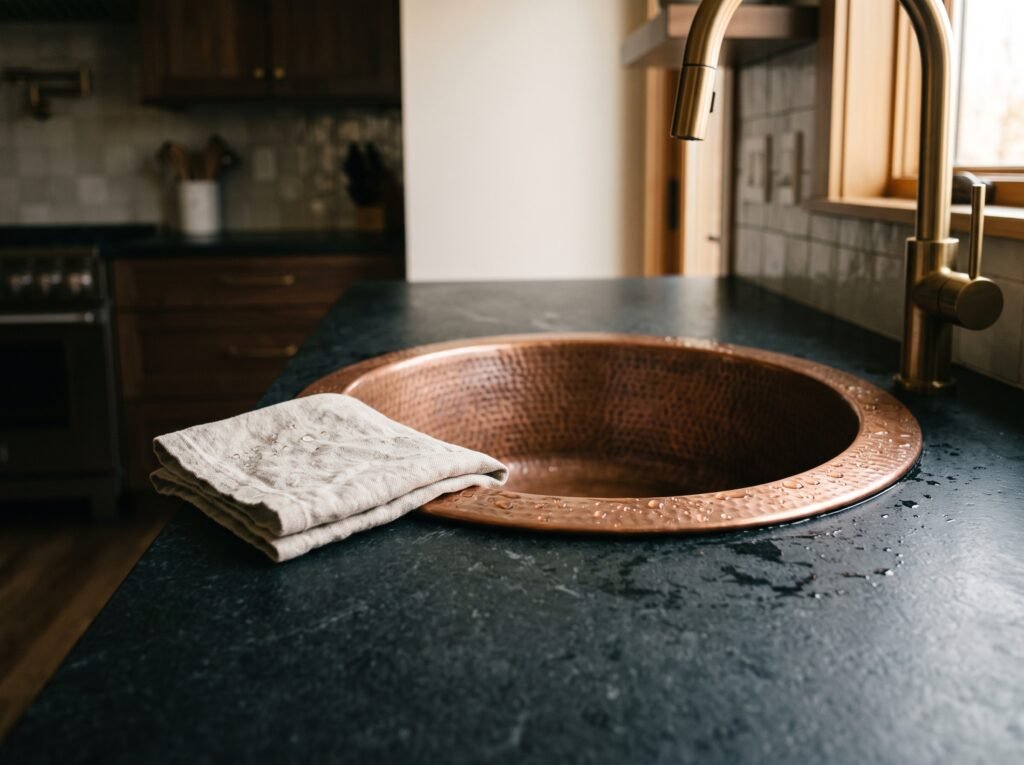
What should you never put in a copper sink?
Never leave acidic food or drink sitting in a copper sink, and never clean it with bleach, ammonia or anything abrasive. Those are the things that visibly change the finish.
- Acidic food left sitting: lemon and other citrus, vinegar, tomato sauce, salsa and ketchup.
- Harsh chemicals: bleach and ammonia.
- Abrasives: steel wool, scouring powder and scrubbing pads.
If an acidic spill does leave a bright patch, do not panic. Copper Sinks Online, a copper sink seller, notes that this will not hurt the sink itself, and the patina will naturally darken again.
Should you wax a copper sink?
You do not have to, but wax slows down how quickly the color changes and makes water bead up and roll away. It is worth it if you want the sink to stay closer to its original color for longer.
Makers commonly suggest Renaissance Wax or carnauba wax, applied to a clean, dry surface. Premier Copper Products suggests you reapply wax periodically, especially when the copper starts to lose its luster. A lacquered copper sink is different: its clear coat already protects it, and the same seller notes that wax is not necessary for lacquered sinks.
Will a copper sink turn green or black?
An indoor copper sink darkens over time rather than turning bright green. It moves from shiny copper toward brown and deeper tones, and Sinkology describes it as darkening as part of the natural patina process, not turning black exactly.
The bright green and turquoise copper sinks you see for sale are usually finished that way in the workshop. CopperKesh, for example, sells a hammered verdigris copper sink with a turquoise patina. If you love that color, buy it finished rather than waiting for a plain sink to get there.


What gauge should a copper sink be?
Choose the lowest gauge you can afford, because a lower gauge number means thicker copper. Thicker copper is more durable and more resistant to dents, which matters most in a busy kitchen.
Gauge runs backwards, which confuses a lot of buyers. Sinkology explains that a lower gauge number indicates thicker copper, and its own copper sinks range from 14 to 18 gauge. For a kitchen farmhouse sink that takes heavy pans, 14 or 16 gauge is the range to look for. For a bathroom vessel sink, 16 gauge is plenty.
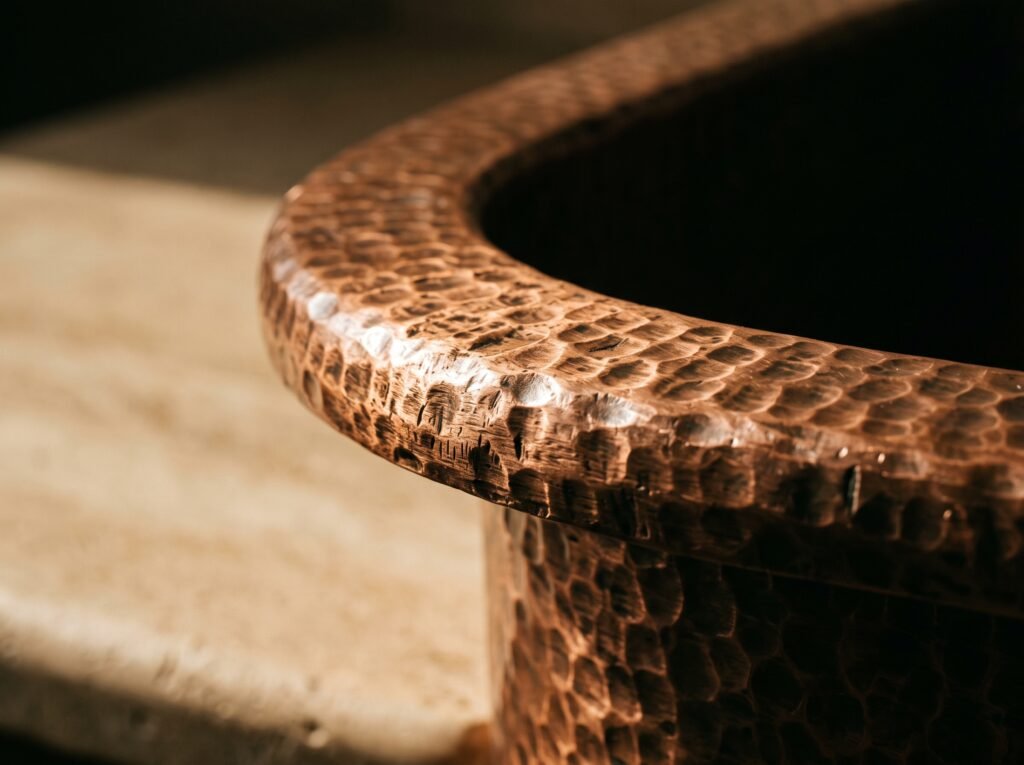
What we found in the listings. In September 2026 we read every copper sink listing at CopperKesh and Zayian, 94 in all. Only 14 of them state a thickness at all. Thirteen of those say 16 gauge and one, a CopperKesh farmhouse sink, says 14 gauge. So if a listing does not mention gauge, ask the workshop before you order. A good maker will tell you.
Are copper sinks safe and hygienic?
Yes. Copper is safe for a sink, and bare copper kills many common bacteria on its surface within hours. It still needs normal cleaning, because that effect does not replace it.
The EPA registration covers copper alloy surfaces tested under its protocols, and the required wording is careful: a copper alloy surface is a supplement to and not a substitute for standard infection control practices. The public health claims on that page apply to products made from registered copper alloys, and a handmade sink is not sold under that registration, so treat the antimicrobial benefit as a bonus rather than a promise.
Which copper sink is right for your room?
Pick the type by where it goes first, then choose the finish. A farmhouse sink suits a kitchen with base cabinets, a vessel sink sits on a bathroom counter, and a small bar or prep sink fits a second station.
| Type | Where it fits | Price at the workshops we list (September 2026) | What to check first |
|---|---|---|---|
| Farmhouse (apron front) | Kitchen, over a cut-down base cabinet | $630 to $1,700 at CopperKesh, $880 to $1,700 at Zayian | Gauge, and whether the cabinet needs reinforcing |
| Vessel | Bathroom counter or vanity | From $170 at CopperKesh, from $199 at Zayian | Counter height and a tall or wall-mounted faucet |
| Bar or prep sink | Kitchen island, bar, second station | From $179 at CopperKesh | Drain size and faucet reach |
Each type has its own guide on the site: copper farmhouse sinks, copper vessel sinks and hammered copper sinks. Prices change, so check the workshop before you buy.


Can you get a discount on a copper sink?
Yes, at some workshops. In September 2026 CopperKesh had a working code for 10% off its whole store, and Zayian was offering free worldwide express shipping on its orders.
We put every code through a real checkout before listing it. When we tested the CopperKesh code, it took 10% off a single $250 pendant with nothing else in the basket, so there was no minimum to reach first. On a $1,700 farmhouse sink, the same 10% is $170. Codes expire, so check the date each one was last tested on the CopperKesh and Zayian store pages, and read how we verify codes.
So, is a copper sink worth it?
A copper sink is a good idea for someone who wants a handmade sink that ages and does not mind a little care. Buy 14 or 16 gauge for a kitchen, keep acids and bleach out of it, wax it if you want the color to stay lighter, and expect it to look better lived-in than new.
See every copper sink code we have checked on the sinks and basins page.
About the authors. JGD Editors are the people who check every code on JustGetDeal in a real checkout before it goes on the site, and who read the workshops’ own listings for the facts in these guides.
Some links on JustGetDeal can earn us a commission. The price you pay is the same. Read the affiliate disclosure.
Get new tested codes by email
One email on Friday: the codes that passed our checkout test that week, the ones we pulled, and new guides. Quiet week, short email.