
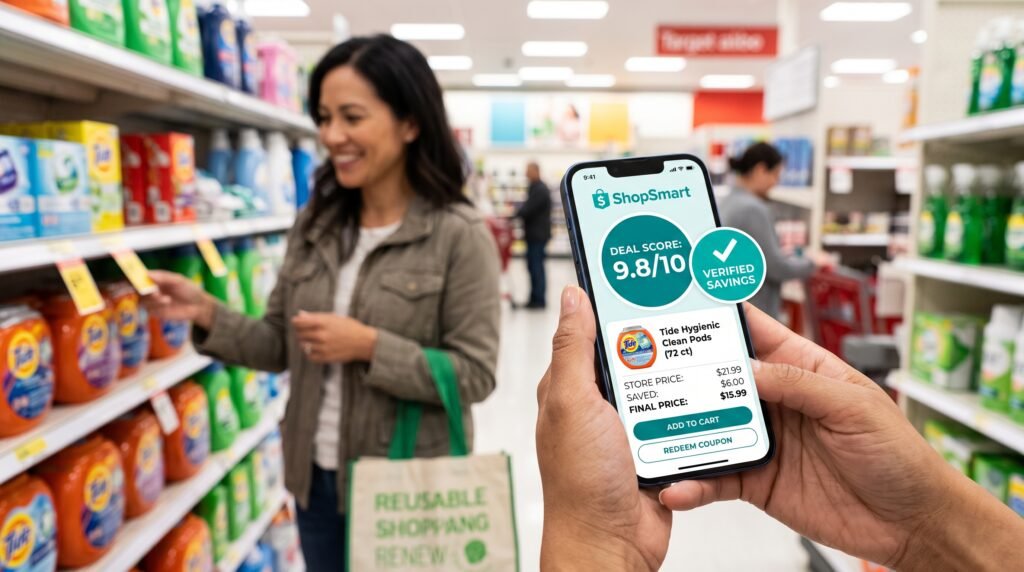
15 Ways to Save Money Even When There Isn’t a Coupon Code
Sometimes you find the product you want, check for a coupon code, and… nothing. No promo code. No obvious sale. No little box promising 20% off.
That doesn’t necessarily mean you have to pay full price. Some of the best ways to save money online have nothing to do with entering a coupon code at checkout.
We’ve put together 15 practical strategies you can use when a traditional promo code isn’t available—from student discounts and cashback to price tracking, abandoned carts, loyalty programs, and simply choosing a better time to buy.
JUSTGETDEAL QUICK TAKE: Don’t judge a deal by whether there’s a coupon box with something to enter. Your real savings are whatever you avoid paying compared with the best realistic alternative.
1. Check for a Student Discount
If you’re a student, don’t stop searching after checking the retailer’s coupon page. Many brands maintain separate student offers that aren’t necessarily displayed alongside regular promotions.
Student discounts can be particularly useful for clothing, technology, software, travel, and everyday essentials.
How to Find One
- Search the retailer’s website for “student discount.”
- Check the retailer’s student or education program.
- Look for student verification during checkout.
- Check whether the discount applies to sale items.
- Compare the student offer against the current sale price.
PRO TIP
Don’t assume a student discount is automatically the best deal. If a retailer is already running a 30% sale and the student discount is 15%, the sale may still be better.
2. Look for a Military Discount
Active-duty military members, veterans, and sometimes military families may qualify for special pricing from participating retailers.
These offers can be easy to miss because they may require verification before the discount appears.
- Check the retailer’s military discount page.
- Look for military verification requirements.
- Check whether the offer applies online, in stores, or both.
- Compare the discount with current promotions.
Eligibility and discount amounts vary by retailer, so always check the current terms before purchasing.
3. Sign Up for the Store’s Newsletter
One of the simplest ways to unlock a first-order offer is to join a retailer’s email list.
Retailers often use email sign-ups to introduce new customers to their promotions, loyalty programs, product launches, and special offers.
SMART MOVE: Don’t sign up five minutes before you need the product. Some welcome offers may take time to arrive, and some may have exclusions or minimum purchase requirements.
What to Check Before Using the Offer
- Minimum spending requirements
- Expiration date
- Excluded brands or products
- Whether sale items qualify
- Whether the discount is for first-time customers only
4. Activate Cashback Before You Buy
Cashback is one of the easiest ways to save when there isn’t a coupon code. Instead of receiving an instant discount at checkout, you receive a portion of an eligible purchase back through a cashback platform.
Popular cashback services include platforms such as Rakuten, TopCashback, and Capital One Shopping. Availability and rates vary by retailer and can change frequently.
A Simple Example
Imagine you are buying a $400 item and a cashback service is offering 5% cashback.
$400 × 5% = $20 cashback
Effective cost after the cashback: $380
That’s a $20 saving without entering a single coupon code.
Cashback usually has eligibility rules and may take time to become payable. Check the platform’s current terms before activating an offer.
5. Leave Your Cart Alone for a While
This is one of the more interesting strategies—and one you should treat as an experiment rather than a guaranteed discount.
Some retailers use abandoned-cart email campaigns to encourage shoppers to finish a purchase. If you add an item to your cart, provide your email when appropriate, and leave without purchasing, you may receive a reminder or incentive later.
The Basic Strategy
- Add the product you actually intend to buy to your cart.
- Make sure the retailer has a way to contact you if you want to receive cart reminders.
- Leave the purchase unfinished.
- Wait and monitor your email.
- If an offer arrives, compare it with the current price before using it.
IMPORTANT: This isn’t guaranteed to work. Some retailers never send abandoned-cart discounts, and some products or accounts may not qualify. Don’t use this strategy when inventory is limited or the price could increase before you buy.
6. Check the Retailer’s Loyalty Program
A retailer’s loyalty program can be more valuable than a one-time coupon, especially if you shop there regularly.
Depending on the program, you may receive member-only pricing, points, birthday rewards, free shipping, early access to promotions, or personalized offers.
PRO TIP
Don’t join every loyalty program you encounter. Pick the retailers where you already shop regularly. Otherwise, you’ll end up with dozens of accounts and very little meaningful value.
7. Use a Browser Extension to Check for Better Prices
Sometimes the problem isn’t that there is no coupon. It’s that you’re shopping at the wrong price.
Shopping tools such as Capital One Shopping can automatically search for coupon codes, compare prices, and identify available rewards while you’re browsing.
These tools can be especially useful when you are comparing several retailers for the same product.
The Rule We Follow
Use shopping tools to discover alternatives, but always verify the final price yourself. Check shipping, taxes, seller reputation, return policies, and the exact product model before buying.
8. Compare the Same Product at Multiple Stores
You don’t need a coupon if another retailer is already selling the product for less.
Before purchasing an expensive item, open a few tabs and compare the exact model number. This matters especially for electronics, appliances, beauty products, and branded goods.
- Compare the exact model.
- Check shipping costs.
- Check estimated delivery time.
- Compare return policies.
- Check whether the seller is the retailer itself or a marketplace seller.
- Calculate the final checkout price.
9. Check the Price History Before Buying
A product marked “20% off” isn’t necessarily a bargain.
Retail prices move constantly. A retailer can raise a price and later advertise a discount that looks impressive without producing a particularly low final price.
Tools such as CamelCamelCamel and Keepa can help Amazon shoppers review historical pricing and determine whether a current price is actually attractive.
THE BETTER QUESTION: Don’t ask “How much percent off is this?” Ask “How does today’s price compare with what this product normally sells for?”
10. Wait for the Right Shopping Season
Sometimes the best coupon is patience.
Retailers follow seasonal sales patterns. Winter clothing tends to become less attractive to retailers as spring approaches. Outdoor furniture becomes less urgent once summer is ending. Electronics frequently receive heavy promotional attention around major shopping events.
If you don’t need something immediately, waiting for the product’s natural shopping season can save more than a small promo code.
11. Look for Free Shipping Instead of a Percentage Discount
A 10% coupon sounds better than free shipping until you calculate the actual numbers.
Imagine you’re buying a $40 item. A 10% discount saves $4. If shipping costs $9, the “10% off” offer still leaves you paying considerably more than a free-shipping promotion.
DO THE MATH: Always compare discounts against the final amount you will actually pay, not just the percentage displayed beside the product.
12. Check for an App-Only Offer
Some retailers use their mobile apps to distribute exclusive promotions, rewards, or personalized offers.
If you’re already planning to buy from a retailer, check whether its app offers a better price or additional reward before completing the purchase on desktop.
Don’t install an app solely for a tiny discount if the offer requires unnecessary subscriptions, purchases, or permissions you aren’t comfortable with.
13. Buy Through a Rewards or Cashback Credit Card
If you already use a rewards credit card responsibly, check whether it offers additional rewards for the retailer or category you’re shopping in.
For example, a 2% rewards rate on a $500 purchase would equal $10 in rewards.
IMPORTANT: Never spend more or carry a balance just to earn rewards. Interest charges can wipe out the value of any cashback or points you earn.
14. Buy a Discounted Gift Card
A discount doesn’t always have to happen on the product page. Sometimes the savings can happen before you even reach checkout.
When legitimate retailers or rewards platforms offer discounted gift cards or bonus rewards, you may be able to reduce the effective cost of a future purchase.
Example
If you pay $95 for a legitimate $100 gift card, you have effectively created a 5% saving before buying anything from the retailer.
Only use reputable sources. Be especially cautious with gift-card marketplaces, social media offers, or sellers offering prices that look unrealistically low.
15. Ask Customer Support
This one takes almost no time, and there’s no guarantee—but sometimes simply asking can reveal an available promotion, price adjustment, free-shipping option, or loyalty benefit.
This is particularly worth trying when you’re making a relatively large purchase or when you’ve found a lower legitimate price elsewhere.
A Simple Message
“Hi, I’m ready to place this order today. Are there any current promotions, free-shipping offers, or other savings available for this purchase?”
If they say no, you’re no worse off. If they point you toward an offer you hadn’t found, you’ve saved money without needing to search for another coupon site.
How to Stack These Strategies
The real power comes from combining strategies when the retailer’s terms allow it.
Imagine you’re buying a $500 product. You don’t have a coupon code, but you find a 5% cashback offer, qualify for a 10% student discount, and receive 2% in credit-card rewards.
Starting price: $500
10% student discount: −$50
Price after discount: $450
5% cashback: approximately −$22.50
2% card rewards: approximately −$9
Your effective cost could be around $418.50, assuming all three benefits apply to the same purchase and the relevant terms are satisfied.
The example is illustrative. Discounts, cashback, rewards, and stacking rules vary by retailer and program.
The 5-Step Routine We Use Before Buying Online
You don’t need to try all 15 strategies every time you shop. For most purchases, this quick routine is enough.
1. Search JustGetDeal for an available coupon or promotion.
2. Compare the product’s price at other retailers.
3. Check for cashback, student, military, loyalty, or first-order savings.
4. Check whether waiting could produce a better price.
5. Calculate the final checkout price, including shipping and other fees.
Don’t Let “No Coupon Available” End Your Search
A missing coupon code doesn’t mean you’ve reached the end of your savings options.
The better approach is to think about the entire purchase. Can you get a lower price somewhere else? Can you earn cashback? Do you qualify for a student or military discount? Is free shipping available? Would waiting a week or two make sense?
When you start asking those questions, saving money becomes less about hunting for one magical code and more about making better buying decisions.
JUSTGETDEAL BOTTOM LINE: The best deal isn’t always a coupon. Sometimes it’s cashback. Sometimes it’s a better retailer. Sometimes it’s waiting. And sometimes it’s simply knowing that the price you’re looking at is already a good one.
Quick Checklist: Before You Click “Buy”
- ☐ Did I check JustGetDeal for a coupon?
- ☐ Did I compare the price at another retailer?
- ☐ Did I check for student or military savings if applicable?
- ☐ Did I check the retailer’s newsletter or first-order offer?
- ☐ Did I activate cashback before purchasing?
- ☐ Did I check the loyalty program?
- ☐ Did I check the product’s price history?
- ☐ Did I compare shipping costs?
- ☐ Could I wait for a better seasonal price?
- ☐ Did I calculate the actual final cost?
Final Takeaway
You don’t need a coupon code to be a smart shopper.
You need to know where the money can be saved.
Check for special discounts. Activate cashback. Compare retailers. Track prices. Ask customer support. Wait when it makes sense. And always look at the final amount—not the giant percentage printed next to the original price.
That’s the difference between simply finding coupons and actually becoming a smarter online shopper.
Last updated: August 2026