
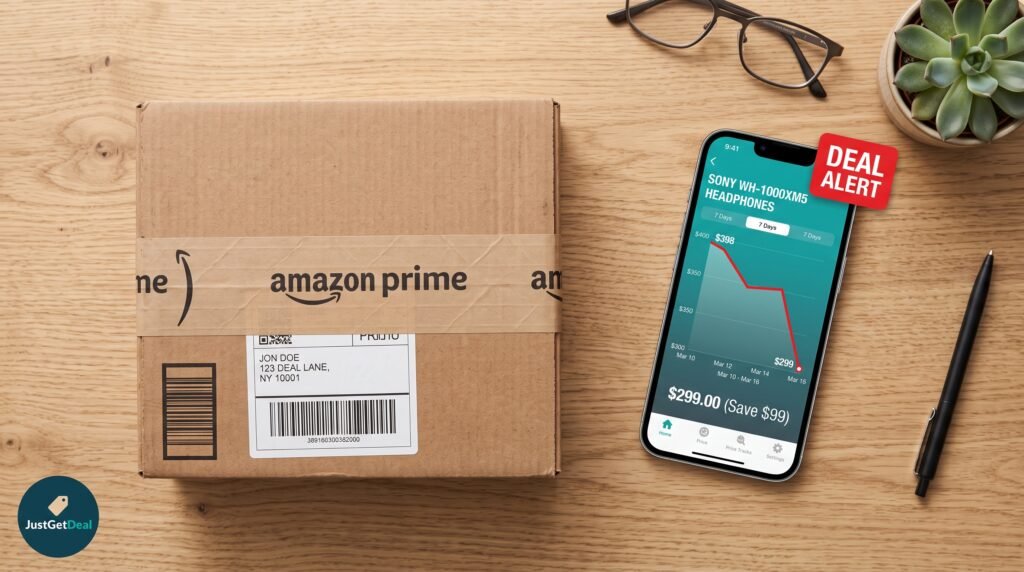
How to Save Money on Amazon Without Waiting for Prime Day
You don’t need to wait for Prime Day to get a better price on Amazon.
Amazon prices change constantly, and some of the best savings come from strategies that have nothing to do with a giant sale event. Subscribe & Save, Amazon Resale, Lightning Deals, price tracking, coupons, and simple price comparisons can all reduce what you actually pay.
The trick is knowing which strategy makes sense for the product you’re buying—and knowing when an Amazon “deal” isn’t really a deal.
JUSTGETDEAL QUICK TAKE: Don’t judge an Amazon deal by the percentage shown beside the original price. Compare the actual price, check the product’s history, and look for additional savings before you buy.
Affiliate disclosure: JustGetDeal may earn a commission when you purchase through qualifying links. This does not affect the price you pay.
1. Check the Price Before You Check the “Discount”
The first Amazon shopping habit to build is simple: look at the actual selling price before getting excited about the discount percentage.
A product can display a large percentage-off message and still not be at an unusually low price. Amazon prices move up and down, sometimes several times, so the current price needs context.
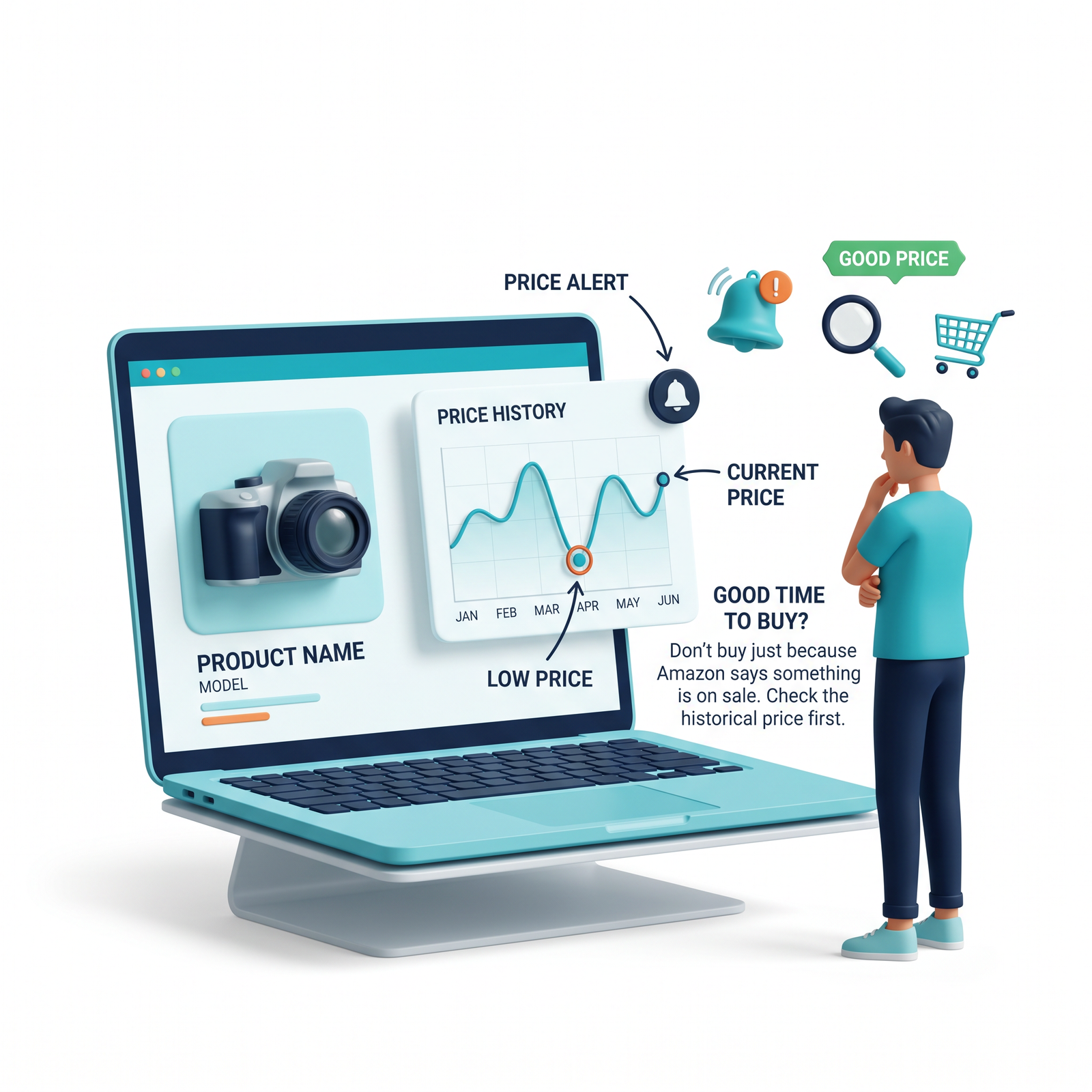
Before buying an expensive item, check its recent price history and compare the current price with what shoppers have paid previously.
PRO TIP: A 30% discount is not automatically better than a 10% discount. The better deal is the product with the better final price.
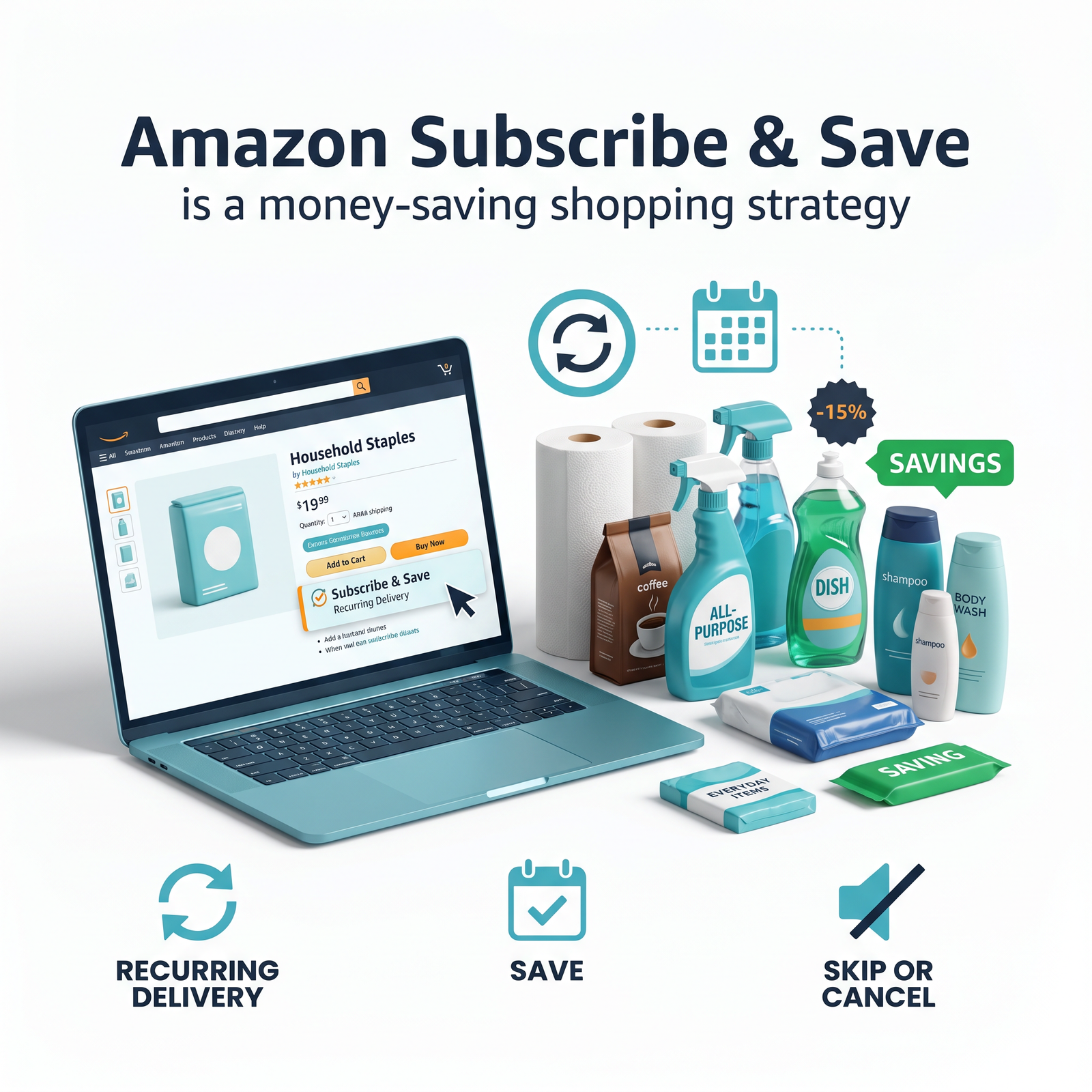
2. Use Subscribe & Save for Products You Actually Rebuy
If you’re regularly buying the same household essentials, Subscribe & Save can be worth checking before placing a normal one-time order.
It’s particularly useful for products such as toiletries, cleaning supplies, pet supplies, pantry items, and other things you already know you’ll need again.
The important part is not simply seeing the word “Subscribe.” Compare the subscription price with the current one-time price and make sure the recurring order actually makes sense for you.
When Subscribe & Save Makes Sense
- You already buy the product regularly.
- The subscription price is meaningfully lower than the one-time price.
- You have enough storage for the product.
- You can manage the delivery schedule.
- You have checked the current terms and exclusions.
PRO TIP
Never subscribe simply because the percentage looks attractive. If you don’t need another shipment, the “saving” isn’t really a saving.
3. Check Amazon Resale Before Buying New
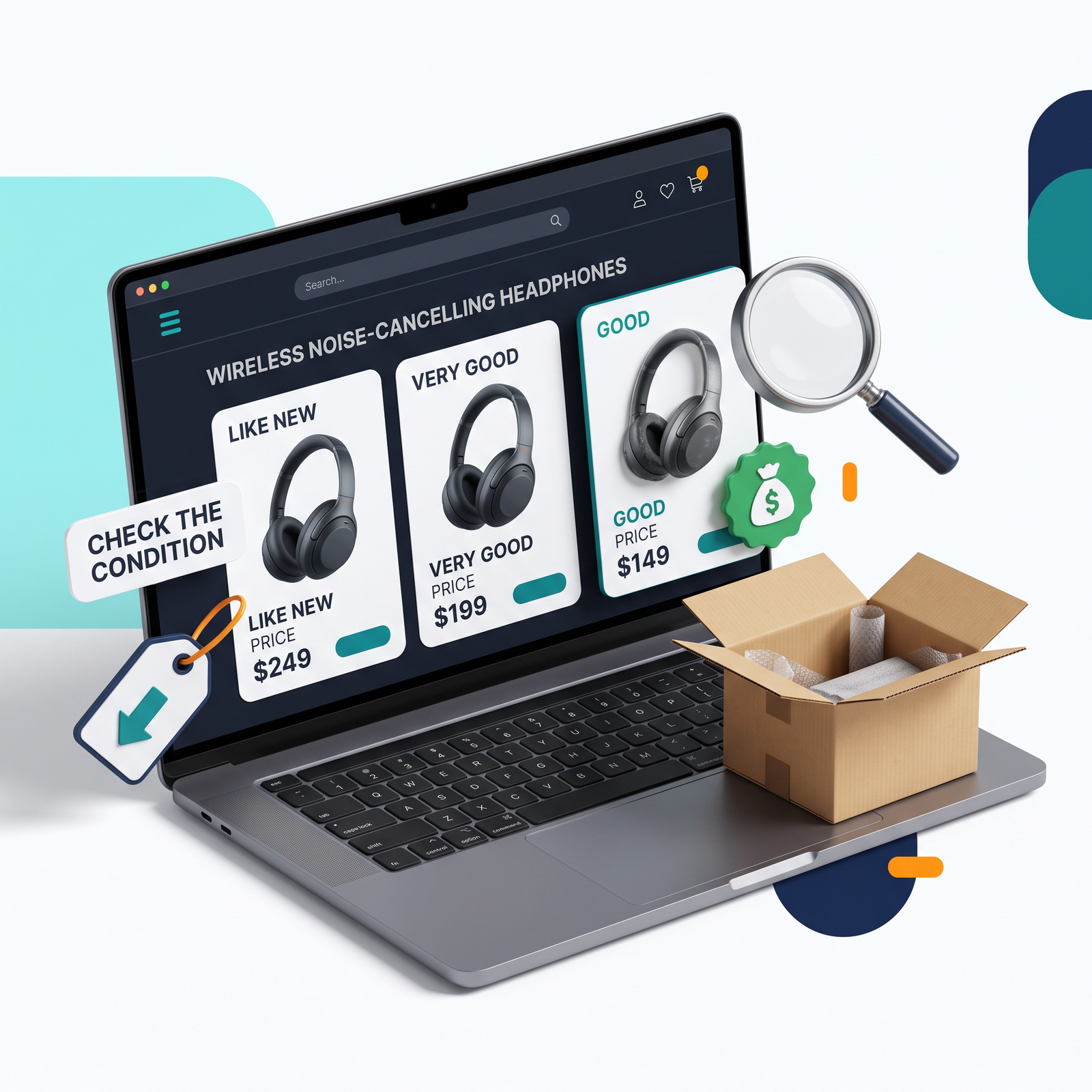
Here’s a strategy many shoppers overlook: the cheapest sensible option isn’t always a brand-new item.
Amazon offers products through its resale and used-item listings, where available. Depending on the product and its condition, you may find an item at a lower price than the new version.
The key is reading the condition carefully instead of assuming every used item is the same.
What to Check Before Buying
- The exact condition listed for the product.
- Whether accessories are included.
- Whether the original packaging is included.
- The seller and fulfillment information.
- The return policy that applies to the specific listing.
- The price difference compared with buying new.
SMART SHOPPING RULE: If the used or open-box version saves you only a few dollars, buying new may be the better value. The bigger the price difference, the more worth it is to investigate the alternative.
4. Don’t Ignore Lightning Deals
Lightning Deals are designed to create urgency. You see a discounted product, a limited time window, and sometimes a progress indicator showing how much inventory has been claimed.
That urgency can be useful when the price is genuinely good—but it can also encourage impulse purchases.
Before You Click Buy
- Check the current price.
- Look at the product’s recent price history.
- Compare the same model at other retailers.
- Check reviews and seller information.
- Ask yourself whether you actually needed the product before seeing the deal.
The countdown should never be the reason you buy. The price, product quality, and your actual need for the item should make the decision.
PRO TIP
If a Lightning Deal is for something you weren’t planning to buy, close the page and think about it. A discount on something you don’t need is still money spent.

5. Track Amazon Prices Before You Buy
If you’re buying something expensive, don’t feel pressured to purchase simply because the current price looks acceptable.
Price-tracking tools can show you how a product’s price has changed over time. That gives you much more useful information than a basic “was $X, now $Y” message.
Two Tools Worth Knowing
- Keepa: useful for Amazon price history, tracking, and price-drop alerts.
- CamelCamelCamel: another popular Amazon price-tracking tool that provides historical price information and alerts.
The goal isn’t to predict the exact lowest price you’ll ever see. It’s to understand whether today’s price looks reasonable compared with the product’s recent history.
PRICE-TRACKING TIP: If you don’t need the item immediately, set a price alert and wait for your target price instead of checking the product manually every day.
6. Check for Coupons on the Product Page
Sometimes the easiest saving is sitting right on the product page.
When an eligible coupon is available, Amazon may display a coupon option that you can select before adding the product to your cart.
Always look for an available coupon before checkout. But don’t assume one will be available for every product or that the coupon is the best possible saving.
- Check the product page.
- Look for a coupon checkbox or promotion.
- Read the coupon terms.
- Make sure the discount is reflected correctly before completing the purchase.
7. Compare the Same Product Across Sellers
Amazon is a marketplace, so the same product can sometimes be available from different sellers at different prices.
Before choosing the cheapest listing, compare more than the headline price.
- Seller rating and feedback.
- Whether Amazon fulfills the order.
- Shipping cost and delivery date.
- Product condition.
- Return eligibility.
- Warranty information when relevant.
DON’T CHASE THE LOWEST NUMBER: A seller offering the product for $5 less isn’t necessarily giving you the better deal if the shipping, return policy, condition, or seller reliability is worse.
8. Compare the Unit Price on Multipacks
Bigger packages often look cheaper because the headline price is lower per item. But the only way to know is to calculate the unit price.
Here’s the Math
Pack A: $18 for 12 units = $1.50 per unit
Pack B: $25 for 20 units = $1.25 per unit
In this example, the larger package costs more upfront but gives you a lower cost per unit.
Use unit price whenever you’re comparing groceries, household supplies, personal care products, and other repeat purchases.
9. Don’t Ignore Free Shipping
A lower product price doesn’t always mean a lower final cost.
If you’re comparing Amazon with another retailer, include shipping when calculating the total. A $48 product with free shipping can be a better purchase than a $45 product that adds $8 at checkout.
DO THE MATH: Compare the final amount you’ll actually pay, not just the product price displayed in search results.
10. Use Prime Benefits Strategically
If you already have a Prime membership, use the benefits you’re paying for—but don’t assume Prime automatically makes every product the cheapest option.
Compare the actual product price, shipping options, delivery time, and alternatives before buying.
The value of Prime often comes from the combination of convenience and eligible benefits rather than a permanent discount on every item.
11. Check Amazon Renewed for Electronics
For electronics, refurbished products can sometimes offer a meaningful price difference compared with buying new.
Amazon Renewed is designed for refurbished products that meet Amazon’s program requirements. If you’re considering one, compare the price difference carefully and read the current product and warranty information.
PRO TIP
A refurbished laptop that saves $150 may be worth investigating. A refurbished product that saves $8 may not be worth the trade-off for your particular purchase.
12. Check the Product Reviews Before Chasing the Discount
Saving money on a product you don’t actually want is not saving money.
Before buying because of a discount, look beyond the star rating. Read recent reviews and pay attention to recurring complaints about durability, sizing, battery life, compatibility, or quality.
The best deal is a product that solves your problem at a price you’re comfortable paying.
The 5-Minute Amazon Savings Routine
You don’t need to use every strategy in this article every time you shop. For most purchases, this quick routine is enough.
1. Search JustGetDeal for an available Amazon promotion or coupon.
2. Check the current Amazon price.
3. Check the price history if the purchase is expensive.
4. Look for Subscribe & Save, coupons, resale, or other applicable savings.
5. Compare sellers, shipping, condition, and return information.
6. If the price isn’t urgent and doesn’t look particularly good, consider waiting.
Amazon Shopping Checklist
- ☐ Did I check JustGetDeal for a current promotion?
- ☐ Did I compare the actual selling price?
- ☐ Did I check for an available coupon?
- ☐ Is Subscribe & Save available and useful?
- ☐ Did I check Amazon Resale or other available conditions?
- ☐ Did I check the price history?
- ☐ Did I compare other sellers?
- ☐ Did I check shipping and delivery?
- ☐ Did I check reviews and recent feedback?
- ☐ Do I actually need the product right now?
Final Verdict: You Don’t Need Prime Day to Save
Prime Day can bring major promotions, but it isn’t the only time Amazon shoppers can find good prices.
The smarter strategy is to understand how Amazon pricing works and use the savings method that fits the product.
Use Subscribe & Save for products you regularly need. Check Amazon Resale when you’re comfortable buying a different condition. Watch Lightning Deals without letting the countdown pressure you. And for expensive purchases, use price tracking to understand whether today’s price is actually worth paying.
JUSTGETDEAL BOTTOM LINE: You don’t need to wait for Prime Day to save money on Amazon. You need to stop looking at the discount badge alone and start looking at the complete purchase: price, history, condition, seller, shipping, and available savings.
That’s how you turn Amazon from a place where you simply shop into a place where you make more informed buying decisions.
Last updated: August 2026